




BBC News, South West

 PA Media
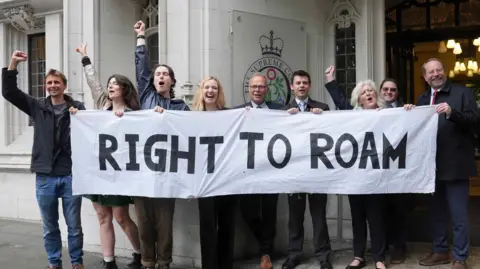
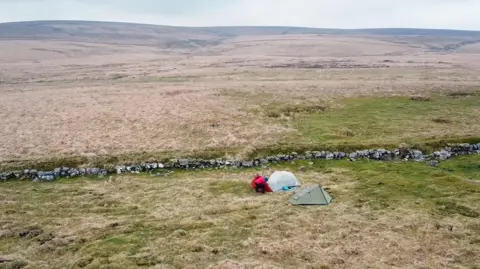
The legal right to wild camp on Dartmoor has been upheld by the Supreme Court in a decision that is likely to reignite the debate over public access to land in England.
Judges unanimously rejected an appeal by landowners Alexander and Diana Darwall who said people should not be able to camp without permission from landowners.
In England there is no general right to wild camp on most private land but Dartmoor National Park in Devon is a rare exception.
The judgement centred on the interpretation of the 1985 Dartmoor Commons Act that states “the public shall have a right of access to the commons on foot and horseback for the purpose of open-air recreation” which judges said were “open-ended and unqualified” and “naturally includes camping”.
 John Harding
It follows a legal battle which began in 2022 when the Darwalls challenged the right to wild camp on their 4,000-acre estate on Stall Moor near Cornwood.
The Court of Appeal overturned the High Court ruling in July 2023, restoring the right to wild camp and the Darwalls appealed to the Supreme Court.
Dartmoor National Park, designated in 1951, covers a 368-square-mile area which features “commons”, areas of unenclosed, privately-owned moorland where locals can put livestock.
The Supreme Court judges pointed to the 1949 National Parks Act which places specific restrictions on activities such as killing animals, damaging the land or obstructing watercourses but does not mention camping.
Judges said “public regulation” of people’s use of Dartmoor was “likely to be more effective in protecting the land than attempts by private persons to challenge such use through themselves having to confront people on their land and bring a claim in private law”.
‘Leave no trace’
The Dartmoor National Park Association said it was “delighted and relieved” by the ruling.
Chief executive Dr Kevin Bishop said: “This is a landmark judgment not just for Dartmoor National Park but for people who have long campaigned for access rights.
“The judgment reaffirms our long-held belief for the public’s right to backpack camp on certain commons and, importantly, our role in regulating and managing that access.”
He added that people did not have a “blanket right to camp wherever, or do whatever, you want”.
“With the right comes a responsibility to make sure that you tread lightly and leave no trace,” he said.
“We have been robust in defending the right to backpack camp, we will be equally robust in ensuring that people exercise that right responsibly and with respect to landowners and farmers.”
He said long term he wanted the government to “work with us to ensure that we have the tools and resources to manage responsible access”.
And he urged the government “to look at lessons that can be learnt from the Dartmoor case before they publish the forthcoming Green Paper on access to nature and the countryside”.
Caroline Voaden, Liberal Democrat MP for South Devon, said she was “absolutely thrilled” with the ruling.
“It is a vindication of something we’ve all known for a long time, that the stars are for everyone, and that access to nature is not a nice to have, but a fundamental necessity for a happy, healthy life.
“Wild camping is good for body and soul, I’m very pleased the judges could see this.”
