




BBC News, Cornwall

 Isaac Ogden
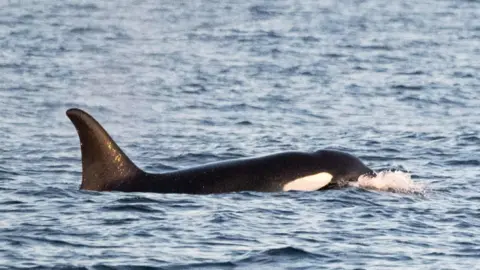
Wildlife experts have confirmed the first ever sighting of orcas from Iberia in Cornish waters.
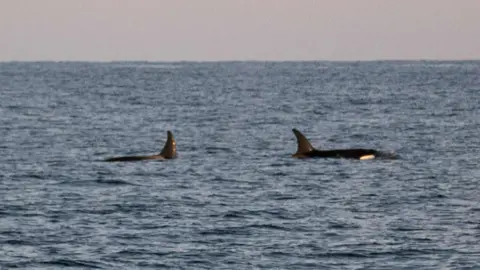
The two orcas were seen by Joe Pender as he conducted a seabird survey near St Agnes, the Isles of Scilly on Wednesday evening.
Rebecca Allen of the Cornwall Wildlife Trust said it was the first time members of the pod, which inhabit the Straits of Gibraltar in winter, had been recorded off Cornwall and the Isles of Scilly.
She said although the sightings were “exhilarating” it meant “unusual things are happening” as food distributions changed.
 Isaac Ogden
 Joe Pender
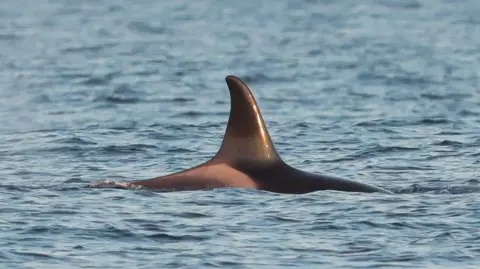
Joe Pender was the skipper aboard the Scilly Pelagics seabird survey who saw the orcas, which are the largest members of the dolphin family.
He told the BBC he had spotted some fins about a mile away near Bishop Rock and as he drew nearer he had realised they did not belong to common dolphins as they were “far too big”.
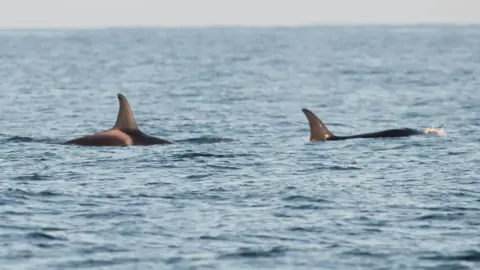
“As we got closer, we realised they were two orcas together,” he said.
Mr Pender said everyone on the boat had been “ecstatic” as they spent about half an hour observing the mammals.
He said: “I’ve seen an orca very distantly some 25 years ago and that’s the only one I’ve ever seen.
“They’re really rare, it’s one thing we really didn’t expect to see here.”
He said it was possible the pair had been in the area for a few days and a fisherman thought he had seen the pair earlier in the week.
Mr Pender added: “There’s been a few seals coming up in the nets having been eaten, it’s possible they [the orcas] may be the culprits.”
 Joe Pender
Ms Allen said the Environmental Records Office for Cornwall and the Isles of Scilly had recorded “so many changes in the type of species we see”.
She said: “We’re seeing more tuna, common dolphin, humpback whales and there’s been a big boom in the octopus population.
“This year seems to have been a notable year for lots of different species and it really feels there’s been a change that’s driving this.
“We don’t understand what this might be but it’s probably linked to warming seas and pushing populations of species further north.”
“As much as it’s really exciting, it’s a little bit of a concern,” she added.
Mr Pender agreed: “We’re seeing a lot more humpbacks, fin whale and blue fin tuna – everything’s on the move.”
