


Close Menu
saiphnews.comsaiphnews.com

    Subscribe to Updates

    Get the latest creative news from FooBar about art, design and business.

    What's Hot

    The Lighthouse Bar opens at The Park Visakhapatnam

    February 6, 2026

    To Win Back the House, Democrats Take the Fight to Deep-Red Areas

    February 6, 2026

    ‘PM battles for survival’ and Rayner ‘ready to go’

    February 6, 2026
    Facebook X (Twitter) Instagram
    Facebook X (Twitter) Instagram
    saiphnews.comsaiphnews.com
    Friday, February 6
    • Home
    • Finance
    • Sports
    • Health

      Fuel Your Workout: 15 Powerful Fitness Motivation Quotes to Keep You Going

      May 15, 2025

      Sizzle Away the Pounds: The Ultimate Guide to Fat-Burning Workouts

      May 14, 2025

      Kickstart Your Fitness Journey: The Ultimate Beginner Workout Guide

      April 30, 2025

      Get Fit Anytime, Anywhere: The Top 10 Fitness Apps You Need to Download Now

      April 30, 2025

      Unlocking Wellness: 10 Essential Habits for a Healthier Life

      April 22, 2025
    • Media & Culture
      1. World
      2. Politics
      3. Health
      4. View All

      Dad's fear as girl mauled by dog on way home

      February 6, 2026

      Davis Cup qualifying: Jack Draper beats Viktor Durasovic and Cameron Norrie wins to give Great Britain 2-0 lead over Norway

      February 6, 2026

      Sea search for missing Blackburn girl suspended over weather

      February 6, 2026

      Parachute propellant missing after aircraft crash

      February 5, 2026

      To Win Back the House, Democrats Take the Fight to Deep-Red Areas

      February 6, 2026

      ‘PM battles for survival’ and Rayner ‘ready to go’

      February 6, 2026

      Starmer branded ‘weak’ over Mandelson saga – as top Labour figure warns it could bring him down | Politics News

      February 6, 2026

      ‘They stole surname of Mahatma Gandhi’: PM Modi mocks Gandhis, takes failed ‘start-up’ jab at Rahul | India News

      February 6, 2026

      Fuel Your Workout: 15 Powerful Fitness Motivation Quotes to Keep You Going

      May 15, 2025

      Sizzle Away the Pounds: The Ultimate Guide to Fat-Burning Workouts

      May 14, 2025

      Kickstart Your Fitness Journey: The Ultimate Beginner Workout Guide

      April 30, 2025

      Get Fit Anytime, Anywhere: The Top 10 Fitness Apps You Need to Download Now

      April 30, 2025

      India’s Cultural Mosaic: A Deep Dive into the Rich Tapestry of Traditions and Modernity

      May 23, 2025

      India-Focused Headlines

      May 22, 2025

      Tradition Meets Technology: How Modern India is Redefining Ancient Rituals

      May 15, 2025

      Global Canvas: Exploring the Latest Trends in International Art Exhibitions

      May 15, 2025
    • National
    • Politics
    • Tech
    • Contact us
    saiphnews.comsaiphnews.com
    Home » Slowing down fashion: Why India must rethink fast fashion
    Uncategorized

    Slowing down fashion: Why India must rethink fast fashion

    saiphnewsBy saiphnewsOctober 11, 2025No Comments5 Mins Read
    Facebook Twitter Pinterest LinkedIn Tumblr Email
    Share
    Facebook Twitter LinkedIn Pinterest Email


    When India debates pollution, the spotlight usually falls on coal plants, cars, or power generation. Rarely do we look inside our wardrobes. Despite its polished and glamorous exterior, the fashion industry is, in reality, one of the dirtiest sectors in practice. On a global scale, the industry utilises approximately 79 billion cubic meters of water, contributes 8-10 % of greenhouse gas emissions, and generates 92 million tonnes of waste annually. India stands as the world’s third-largest textile exporter and a rapidly growing consumer market, positioning itself as both a contributor to the issue and a key player in any potential resolution.
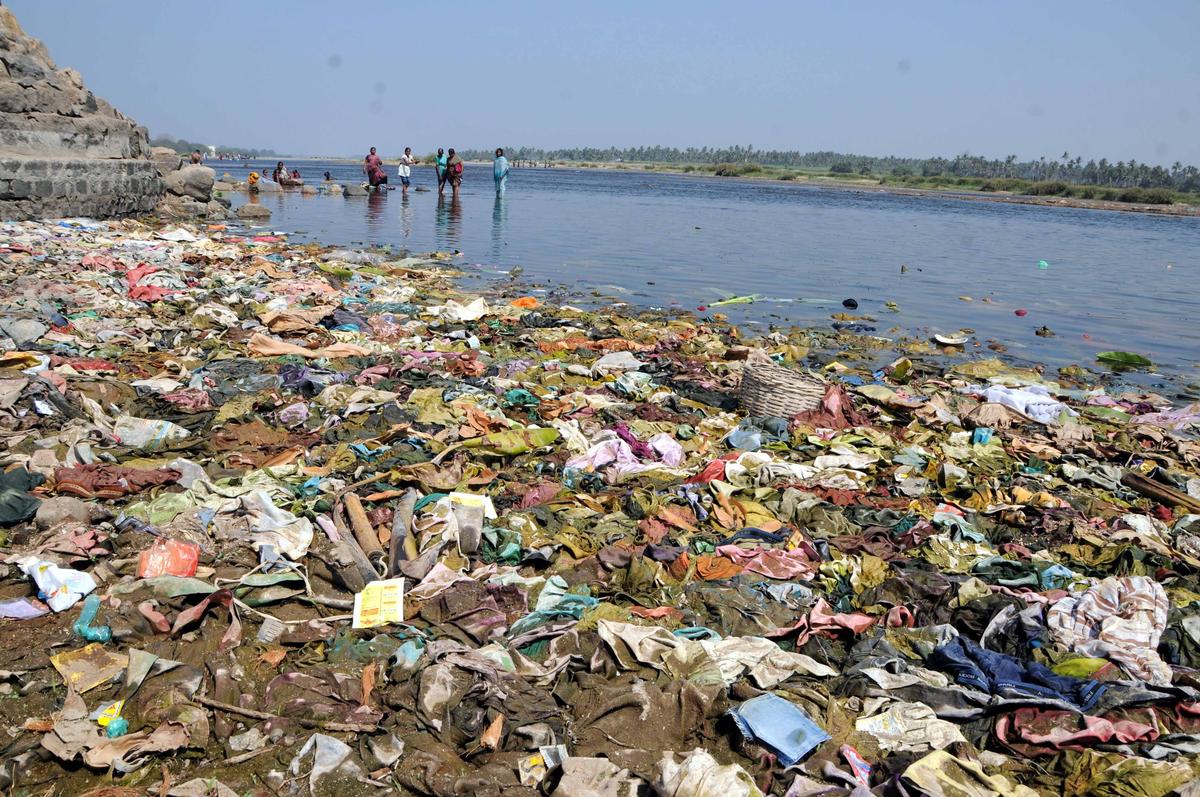
    A portion of the bathing ghat at the Cauvery abutting Arulmigu Magudeeswarar Temple is clogged with clothes and other articles discarded by devotees, in Erode.
PHOTO: M. GOVARTHAN

    A portion of the bathing ghat at the Cauvery abutting Arulmigu Magudeeswarar Temple is clogged with clothes and other articles discarded by devotees, in Erode.
    PHOTO: M. GOVARTHAN
    | Photo Credit:
    GOVARTHAN M

    Mountains of waste and rivers that turned toxic

    Clothing continues to contribute to pollution even after it has been purchased. Washing synthetic fabrics such as polyester or nylon releases microscopic fibres that can evade wastewater treatment facilities. These fibres find their way into our rivers, ultimately contaminating seafood sourced from the Arabian Sea and the Bay of Bengal. Recent studies reveal the presence of micro plastics in salt, drinking water, and even within human blood and lungs. Experts caution about the potential for hormonal disruption, increased cardiovascular risks, and associations with cancer. Textile pollution poses a dual threat, impacting not only the environment but also infiltrating our bodies.

    A worker drying clothes after the dyeing at a unit in Tirupur in Tamil Nadu. Photo: K. K. Mustafah

    A worker drying clothes after the dyeing at a unit in Tirupur in Tamil Nadu. Photo: K. K. Mustafah
    | Photo Credit:
    MUSTAFAH KK

    India produces ~ 7,800 kilo tonnes of textile waste annually. In contrast to plastic or electronic waste, there currently exists no Extended Producer Responsibility (EPR) legislation compelling brands to collect or recycle their products. Once discarded, garments accumulate in landfills like Bhalswa in Delhi and Deonar in Mumbai, where they smoulder and release harmful toxins into the environment. Synthetic fabrics, which have become commonplace, require centuries to decompose. Every polyester T-shirt discarded today could potentially endure longer than the individual who once wore it.
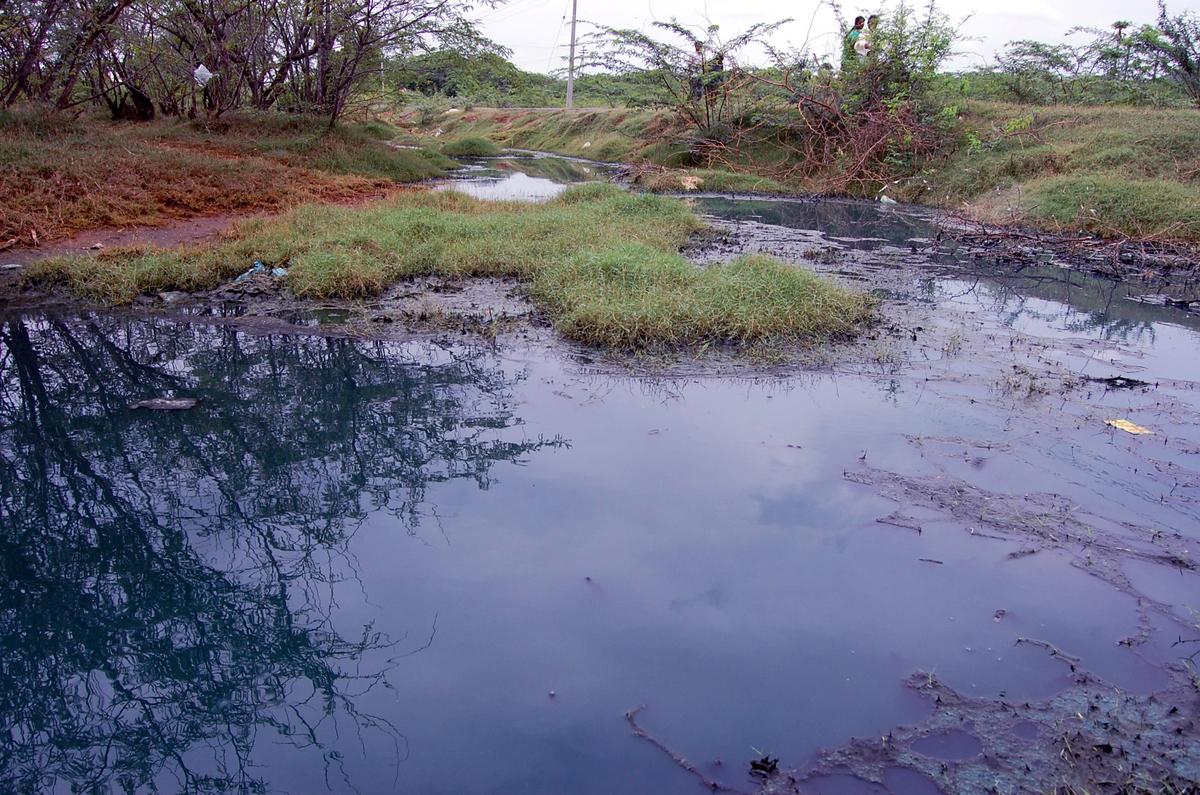
    Textile chemical effluents flowing in odai at Ammapalayam merge with River Noyyal in Erode. 
Photo: M. Govarthan

    Textile chemical effluents flowing in odai at Ammapalayam merge with River Noyyal in Erode.
    Photo: M. Govarthan
    | Photo Credit:
    GOVARTHAN M

    Textile clusters across the country are showing visible impacts. Tirupur in Tamil Nadu, previously recognised as the knitwear capital, discharged a significant amount of untreated dye into the Noyyal River, prompting the Madras High Court to order the closure of hundreds of units. Ludhiana’s dyeing mills, Surat’s polyester factories, and Kanpur’s tanneries persist in discharging chemicals into rivers and groundwater. The Central Pollution Control Board has identified textiles as one of the top ten industrial polluters.
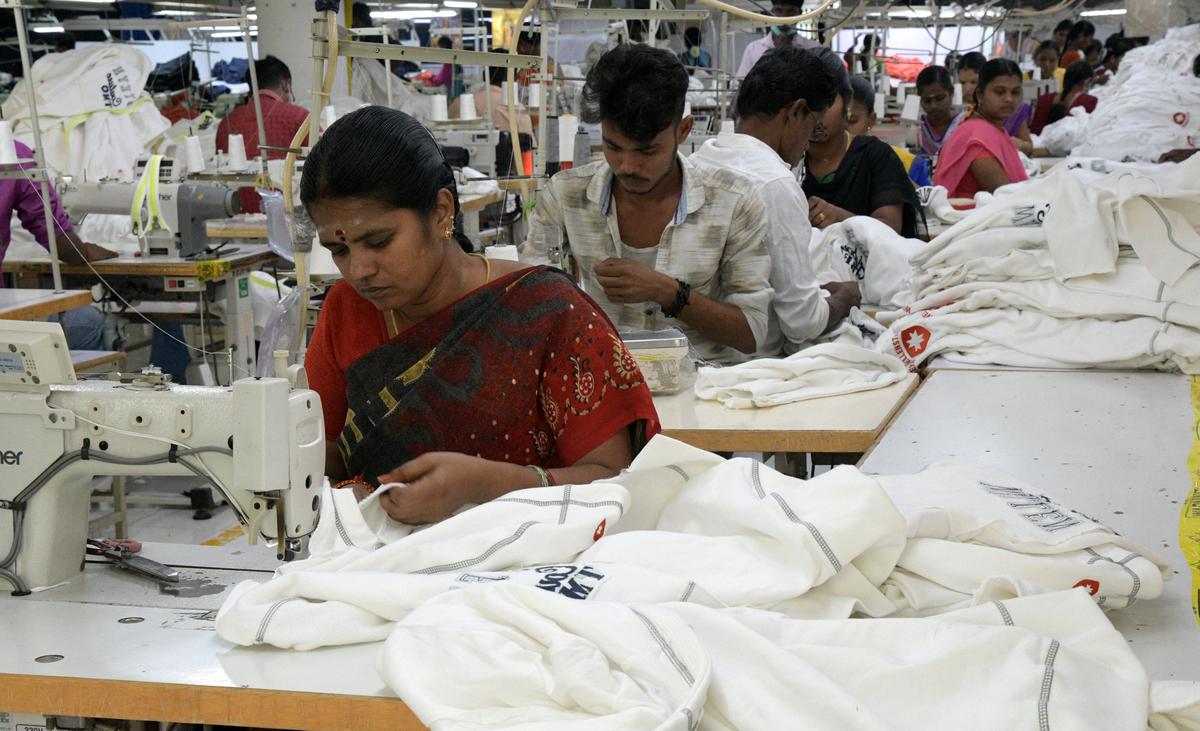
    Workers stitching garments at a knitwear export unit in Tirupur.
Photo:S. Siva Saravanan/ The Hindu

    Workers stitching garments at a knitwear export unit in Tirupur.
    Photo:S. Siva Saravanan/ The Hindu
    | Photo Credit:
    SIVA SARAVANAN S

    Why can India not afford a delay?

    The stakes have never been higher. India is home to 20 of the 30 most polluted cities globally, with nearly 40% of its rivers deemed too contaminated for bathing. India has been positioned at 105th among 125 countries in the Global Hunger Index, highlighting significant challenges related to food and water security. The accumulation of textile waste exacerbates these crises. A circular fashion economy has the potential to transform the landscape by decreasing fibre imports, generating employment opportunities in repair and recycling, and establishing Indian brands as frontrunners in sustainability efforts. Exporters are acutely aware that adherence to European Union regulations concerning chemicals and waste will soon dictate their access to the market.

    Data focus

    Textiles are among the top 10 industrial polluters in India (CPCB).

    Tirupur knitwear units were shut down by court order for dumping untreated dye into the Noyyal River.

    Ludhiana, Surat, Kanpur industries continue to discharge chemicals into rivers and groundwater.

    India has 20 of the 30 most polluted cities in the world.

    Nearly 40% of India’s rivers are too polluted for bathing. India ranks 105th of 125 countries on the Global Hunger Index.

    If alternatives exist, why haven’t they scaled?

    Research on Indian fashion firms shows the barriers clearly. Sustainable fabrics and waterless dyeing cost more, and small and medium manufacturers cannot absorb the expense. Pollution laws exist, but are poorly enforced. Recycling is technologically outdated: blended fabrics like poly-cotton are almost impossible to separate. Consumers, meanwhile, are addicted to cheap trends, fuelled by Instagram influencers, celebrity wardrobes, and the lure of constant novelty. The way forward needs three shifts.

    1. Policymakers must frame a national circular textiles strategy with EPR mandates, stricter rules on water and chemical use, and incentives for clean technology.

    2. Industry must move beyond token CSR, investing in transparent supply chains, credible reporting, and reverse logistics.

    3. And consumers must rethink habits: buying fewer but better garments, repairing clothes, embracing thrift and rentals, and resisting the lure of endless refresh.

    Fashion has always mirrored social change. In colonial India, khadi was a political symbol; today, slow and circular fashion must become an ecological one. The question is no longer whether to slow down fashion, but whether we can act fast enough before the damage becomes irreversible.

    (The author is a doctoral researcher at Symbiosis International University, Pune, who is also working as a sustainability manager with a major fashion retailer in India.)

    Published – October 11, 2025 02:40 pm IST


    Share this:

    • Click to share on Facebook (Opens in new window) Facebook
    • Click to share on X (Opens in new window) X

    Like this:

    Like Loading...
    Share. Facebook Twitter Pinterest LinkedIn Tumblr Email
    saiphnews
    • Website

    Related Posts

    The Lighthouse Bar opens at The Park Visakhapatnam

    February 6, 2026

    Darshan Mekani Shah traces Bengal’s textile memory through shibori and kantha for an upcoming Chennai exhibition

    February 5, 2026

    Why Osaka should be on your travel list in 2026

    February 5, 2026
    Leave A Reply Cancel Reply

    Our Picks
    Stay In Touch
    • Facebook
    • Twitter
    • Pinterest
    • Instagram
    • YouTube
    • Vimeo
    Don't Miss

    The Lighthouse Bar opens at The Park Visakhapatnam

    Uncategorized February 6, 2026

    The newly launched The Lighthouse Bar overlooking the lighthouse and scenic beach at The Park…

    Share this:

    • Click to share on Facebook (Opens in new window) Facebook
    • Click to share on X (Opens in new window) X

    Like this:

    Like Loading...

    To Win Back the House, Democrats Take the Fight to Deep-Red Areas

    February 6, 2026

    ‘PM battles for survival’ and Rayner ‘ready to go’

    February 6, 2026

    Dad's fear as girl mauled by dog on way home

    February 6, 2026

    Subscribe to Updates

    Get the latest creative news from SmartMag about art & design.

    Our Mission
    Our Mission

    At Saiph News, we are dedicated to delivering the latest updates from across the globe, with a strong focus on National News, International Affairs, Health, Politics, Stock Market Trends, and more. Our mission is to keep our readers informed, engaged, and empowered with factual reporting and insightful analysis.

    Email Us: saiphtech247@gmail.com

    Our Picks
    Subscribe Us For Latest Updates
    Please enable JavaScript in your browser to complete this form.
    Loading
    Facebook X (Twitter) Instagram Pinterest
    • Home
    • Privacy Policy
    • About us
    • Contact us
    • Terms & Conditions
    © 2025 Saiph News. All Rights Reserved.

    Type above and press Enter to search. Press Esc to cancel.

    %d