



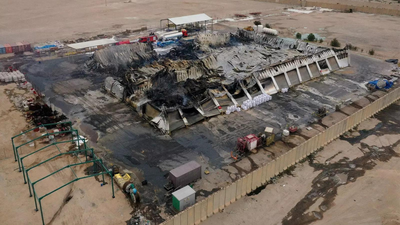
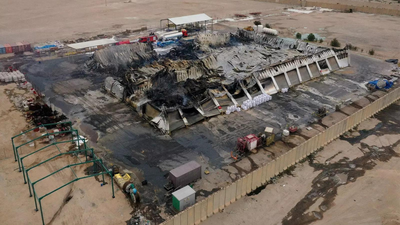
The ongoing conflict in West Asia is entering a new phase as desalination plants, a key source of drinking water across the Gulf, begin to emerge as targets in the widening confrontation involving Iran, the United States and Israel.The development follows claims by Bahrain on Sunday that an Iranian drone attack caused “material damage” to a water desalination plant in the country. According to The New York Times, Bahrain’s interior ministry said the drone strike had damaged the facility but did not disrupt water supply. The country’s water and electricity authority said there had been “no impact on water supplies or water network capacity”.The incident came a day after Iran accused the United States of striking a freshwater desalination plant on Qeshm Island in southern Iran. Iranian foreign minister Abbas Araghchi said the attack affected water supply in several villages.Araghchi in a post on X wrote, “Water supply in 30 villages has been impacted. Attacking Iran’s infrastructure is a dangerous move with grave consequences. The US set this precedent, not Iran”.The US has denied responsibility. The NYT quoted US central command spokesperson Captain Tim Hawkins as saying that American forces were not responsible for the strike.
Attacks spreading beyond oil infrastructure
The conflict began on February 28 after the US and Israel launched strikes targeting Iran’s nuclear programme and military infrastructure, including sites such as Natanz and Fordow. Iran retaliated with missile and drone attacks across the region, targeting Israel as well as Gulf countries hosting US military assets. Initially, strikes focused largely on energy infrastructure such as oil refineries, gas plants and shipping routes around the Strait of Hormuz, pushing global oil prices higher.In recent days, however, incidents near water infrastructure have been reported. Iran earlier struck Dubai’s Jebel Ali port, about 19 kilometres from one of the world’s largest desalination facilities. Damage has also been reported at the Fujairah F-1 power and water complex in the UAE and Kuwait’s Doha West desalination plant, reportedly from nearby port attacks or debris from intercepted drones.
Why desalination plants matter
Desalination plants convert seawater into drinking water, a process that removes salt and impurities using thermal or membrane-based technologies.According to the US department of energy, desalination systems “heat water so that it evaporates into steam, leaving behind impurities, and then condenses back into a liquid for human use.” Another widely used method involves membranes that allow water to pass through while blocking dissolved salts.Most Gulf countries use reverse osmosis, an energy-efficient membrane technology.Water scarcity has made desalination essential for the region. According to a 2020 report by the Gulf Research Center cited by Al Jazeera, groundwater and desalinated water together account for about 90% of the region’s main water resources.More than 400 desalination plants operate along the Arabian Gulf coast, and Gulf Cooperation Council countries account for about 60% of global desalination capacity, producing nearly 40% of the world’s desalinated water, according to research cited by Al Jazeera.Dependence is particularly high in several states, about 42% of the UAE’ drinking water comes from desalination plants, while the figure is around 90% in Kuwait, 86% in Oman and 70% in Saudi Arabia.
Strategic vulnerability in wartime
Because many cities rely heavily on desalinated water, experts say these facilities represent a critical vulnerability during conflict.Naser Alsayed, an environmental researcher specialising in Gulf states, told Al Jazeera that “targeting or disrupting desalination facilities would place much of the region’s economic stability and growth at significant risk”.“Secondly, desalination is the main source of freshwater for most GCC states, especially smaller and highly water-scarce countries such as Bahrain, Kuwait and Qatar. Because this water is primarily used for human consumption, desalination carries a strong humanitarian dimension and is essential for sustaining daily life in the region, making any disruption to these facilities particularly significant for the population,” he added.Abdullah Baabood, an Omani academic at Waseda University, told NYT that the targeting of such facilities signals an escalation.“Targeting a desalination plant in Bahrain crosses an important threshold and represents a serious escalation,” Baabood said. “In the Gulf, desalination facilities are not merely infrastructure. They are essential lifelines that supply drinking water to millions. Striking them risks turning a military confrontation into a direct threat to civilian survival.”
Risks of wider disruption
The Gulf’s heavy reliance on desalination means that damage to a limited number of facilities could disrupt water supplies quickly. A 2010 CIA analysis warned that attacks on desalination infrastructure could trigger national crises in several Gulf countries. Some states have attempted to build resilience through storage reservoirs and pipeline networks. However, experts say smaller states such as Bahrain, Qatar and Kuwait remain more vulnerable due to limited backup supplies.Raha Hakimdavar, a hydrologist at Georgetown University in Qatar, told Al Jazeera that damage to water infrastructure could also have wider effects on food security and economic stability in the region.With tensions continuing across the Gulf, analysts say the shift from oil and shipping targets to water infrastructure highlights how essential services are becoming part of the strategic landscape in the expanding conflict.
