



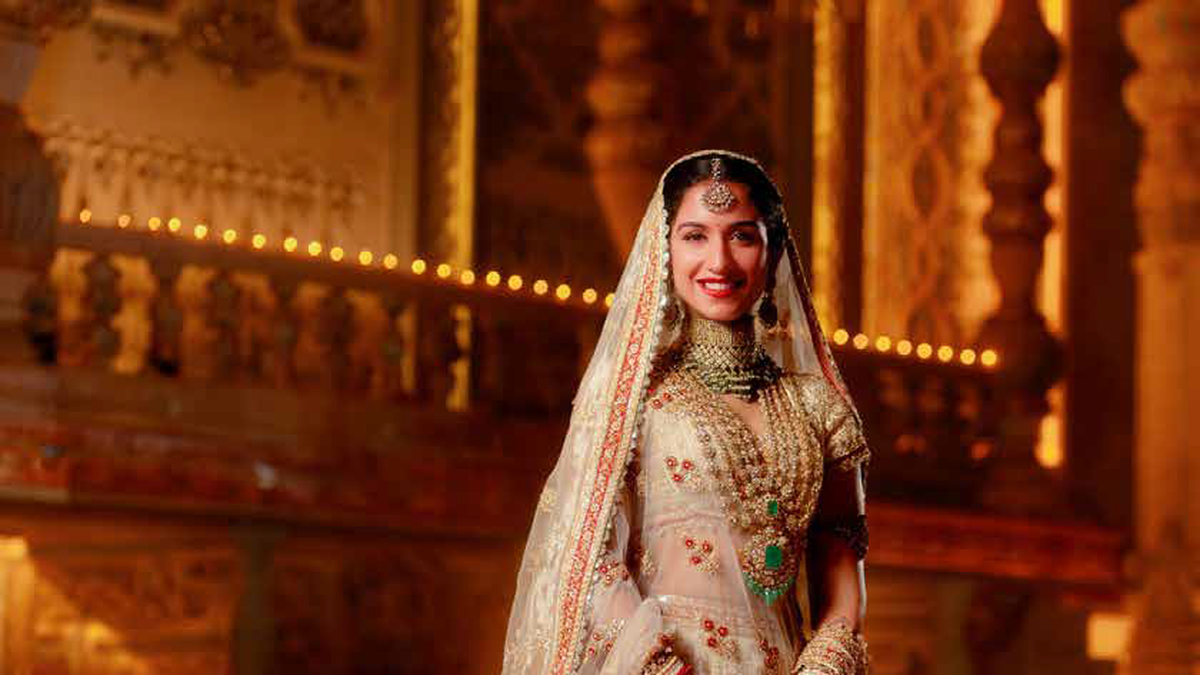
Mothers, sisters, aunts — every family has that one relative who is adept at draping a sari. Until a few years ago, one of them would be assigned the task of draping the bride’s wedding sari. She would stand still in her blouse and skirt, a bunch of safety pins in hand, as the relative went about the task, joking about the groom’s relatives as the bride blushed. Today though, the wedding sari has evolved a great deal. While local salons have make-up artistes who usually drape the client’s sari, brides now prefer experts who can do the job to the T. Sari drapers offer impeccable finish, not to mention styling tips on how to carry the outfit well. After all, a sari’s beauty depends entirely on how it is draped.
“At six yards, it is a very versatile garment. It doesn’t need any stitch or cut and yet, fits every single female on this planet,” says celebrity sari draper Dolly Jain. Kolkata-based Dolly has been in the field for 20 years, and rose to fame with her online sari tutorials and workshops. She now travels the world to drape saris for brides. “The sari is the best garment to give shape to the curvy Indian body. It flaunts the right amount, hides the right amount and makes you look sexy, serene, and sensuous, adding value to your personality,” she says. According to Dolly, with the garment, comes power and instant respect.
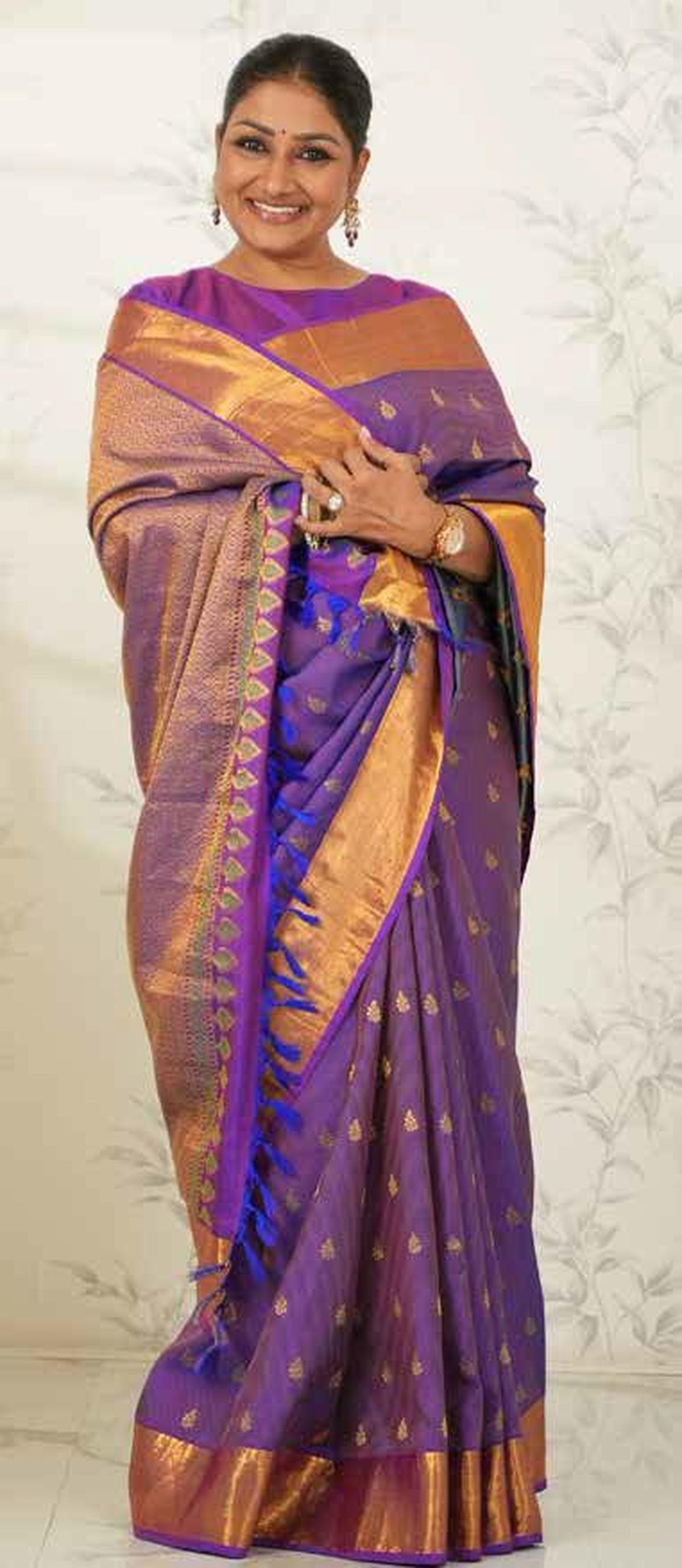
Celebrity sari draper Dolly Jain
| Photo Credit:
Special arrangement
Brides who opted for dresses for cocktails, and lehengas for the mehndi are now embracing the sari, according to Dolly. “It is making a comeback,” she says. “Brides are choosing to wear saris for cocktails, pairing them with strapless and off-shoulder blouses, and bralettes. They carry these outfits with confidence.”
Dolly has draped saris over lehengas, pants, and even skirts for brides. “Some brides even choose to drape two saris,” she notes, talking about a bride who wore saris belonging to her grandmother and mother, together, adding a veil from the groom’s side. “It was her way of remembering the two women who were not there in her life anymore,” says Dolly.
“People who are sentimental will understand that a sari that is passed down carries a lot of value,” she adds. Another reason that saris are replacing lehengas in weddings is that the latter can be cumbersome to store after the event. “Where will they store the can-can and the heavy skirt? Women feel that the lehenga takes up the space of 50 other items of clothing in their wardrobe. It is expensive as well and brides are looking at investing in an heirloom piece, such as a gold kanjivaram.”

Deepika Padukone in a sari draped by Kalpana Shah
| Photo Credit:
Special arrangement
Dolly has draped for celebrities including Deepika Padukone, Raveena Tandon, Alia Bhatt, Sonam Kapoor, and Isha Ambani. “Working with celebrities has been amazing,” she says. “Their world is very different, what with tons of cameras on them all the time, and dealing with constant stress.” Draping for celebrities comes with a lot of responsibilities as well. “Even if the placement of a single pin goes wrong, I will have to face backlash,” she says, adding that however, things have been smooth over the past two decades for her. “I’m glad I’m getting such opportunities,” she says.
Dolly is travelling “27 days a month,” but she says she is enjoying every bit of it. She has faced several moments of panic, and she has dealt with a cool head. “Once, a renowned lady in Mumbai had invited me for a draping,” she recalls. “She was getting her hair and make-up done. When I lifted the embroidered sari to pleat it, it felt very light.” To her shock, she found that her client had cut it into two since she felt it was too long for her. With very less time at her disposal, Dolly figured out a way. She draped the two pieces of the sari, which in the end resembled a chic sari and lehenga crossover.
So, why should a bride pick a sari for her big day?
“If she wants to look her prettiest that day, she has to choose a sari. The garment has to be worn with the sindoor, mehndi, bindi, chudi…all of which she may not wear again. So, she can go all out with a sari on her wedding day,” says Dolly.
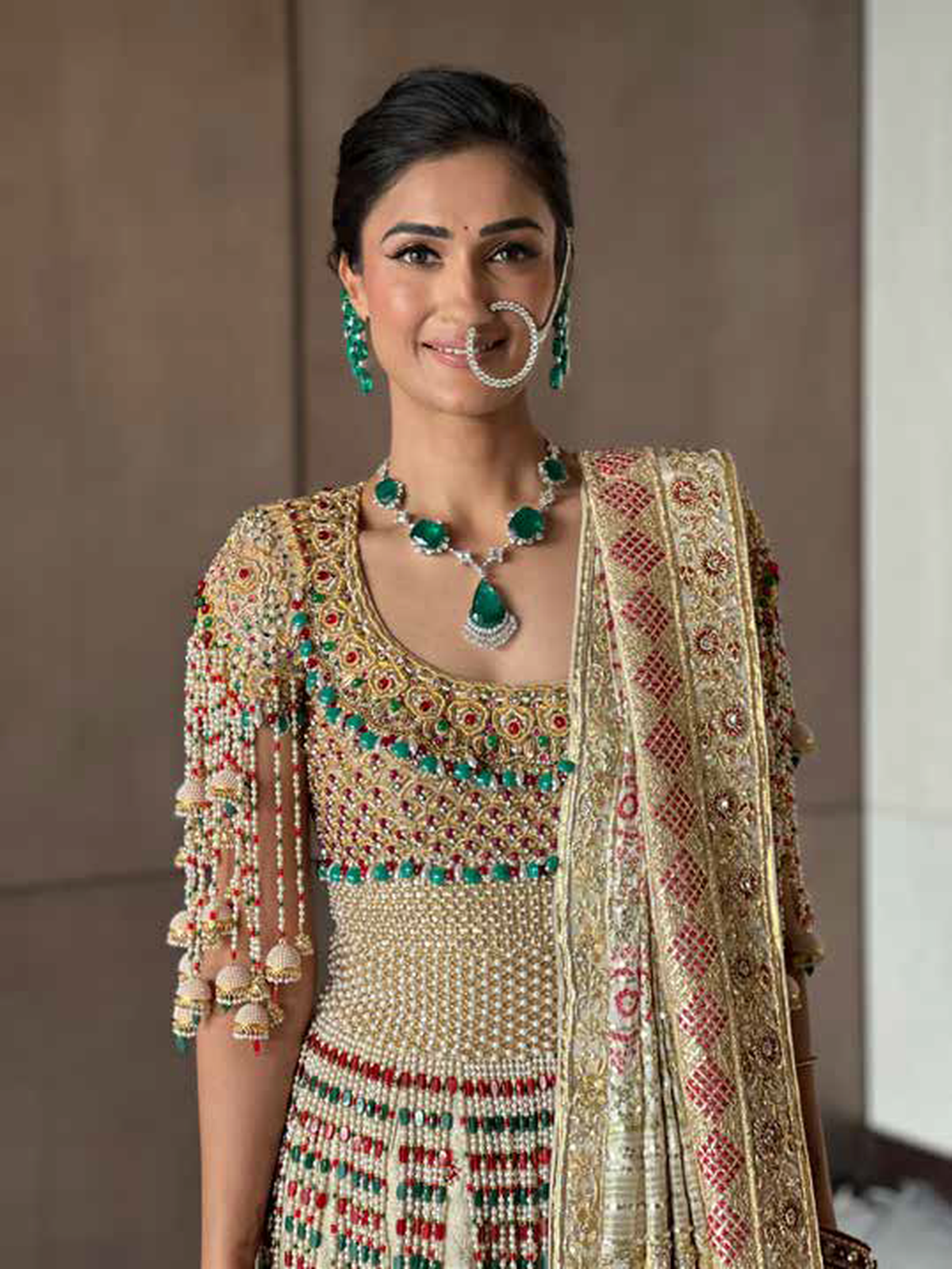
Brides who opted for dresses for cocktails, and lehengas for the mehndi are now embracing the sari
| Photo Credit:
Special arrangement
Dolly grew up admiring her grandma draping a sari. “She wore the Rajasthani seedha pallu style and could drape it in just seven seconds,” she recalls. “Dadi was very particular about not using pins to secure the fabric. She felt that it cut through the threads.” Dolly too knows that pins can damage a sari, and has popularised a technique of inserting a small bead into the safety pin before using it to pin up the pleats. In a video tutorial, she explains how this will prevent the sari from getting stuck inside the pin, a common grouse.
Dolly prefers to wear the garment in a free-flowing fashion, letting the pallu free, without the pleats. “I wear a lot of handloom saris and this way, the weaver’s expertise gets noticed,” she says.
Mumbai-based Kalpana Shah is among the most senior sari drapers in India. She can be considered to be a frontrunner of the trend. She has draped saris for celebrities including Deepika Padukone, Aishwarya Rai, Madhuri Dixit, and Anushka Sharma. “The sari is always in; it is evergreen,” says Kalpana, who is trained in Bharatanatyam. She travels across the country for weddings, also holding sari draping workshops in cities such as Chennai and Bengaluru. Today, many of Kalpana’s students are professional sari drapers themselves. She was among the first stylists to appear on TV shows for sari draping tutorials.
Kalpana says that young brides these days prefer a tight drape, one that is figure-hugging. “They want to show some waist,” she says. The heavy wedding silk, she says, is not easy to drape. “Which is why I take time to iron the pallu and tummy pleats well,” she says, adding that she keeps the sari pre-pleated at least 30 minutes before it is to be draped.
Kalpana has always been fond of make-up and dressing up. “In my family, everyone would want me to apply make-up and drape saris for people at functions,” she recalls. She gradually started draping saris for a charge, starting with ₹300 in 1988.
Through word-of-mouth referral, she got the opportunity to drape for Aishwarya Rai in the movie Hum Dil De Chuke Sanam. “Designer Nita Lulla encouraged me to drape for people in the film industry back then,” she says, adding that Madhu Sapre was the first model she draped for. “I kept researching for ways to style the sari to make it appealing to the present generation,” she says.
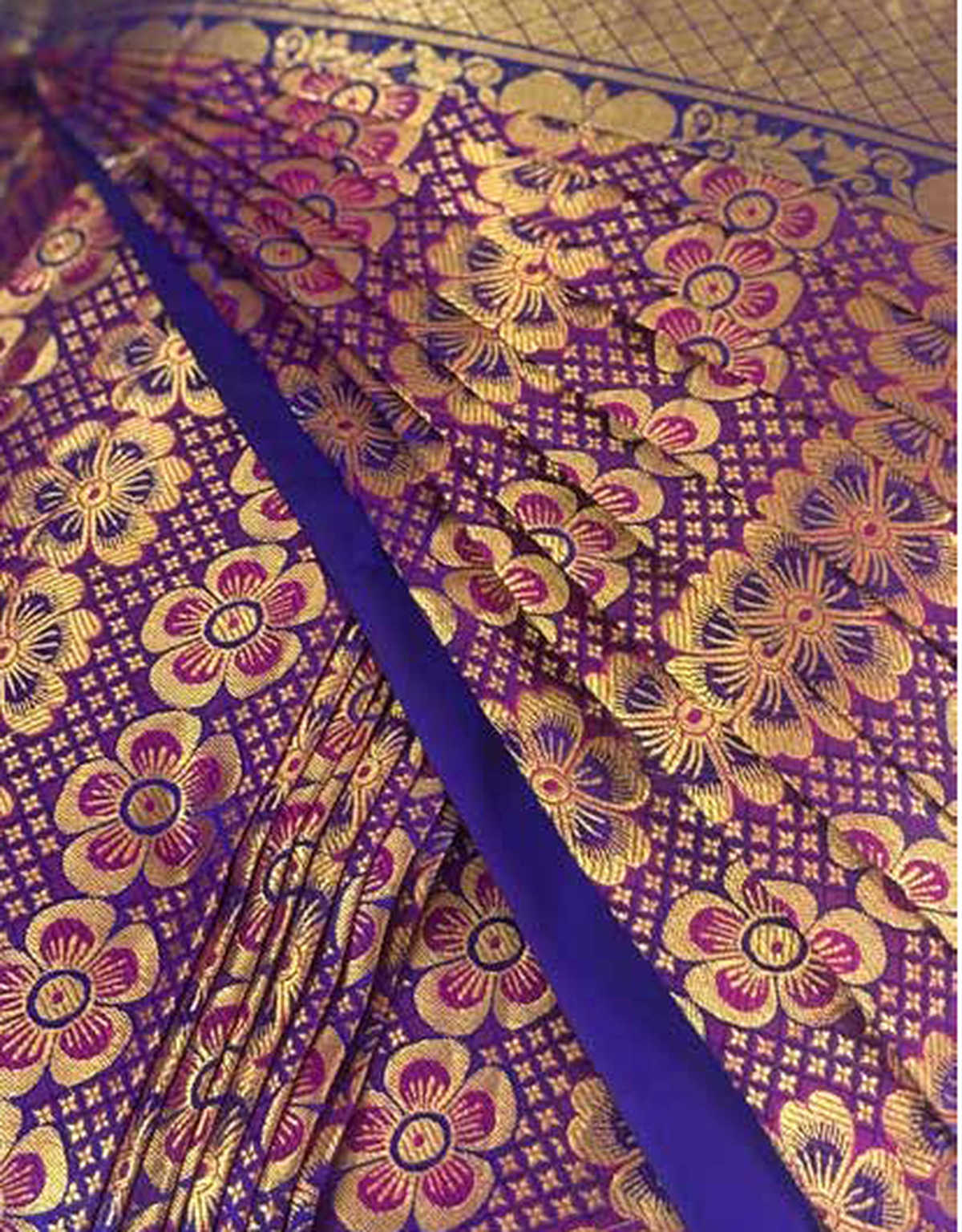
A wedding sari pre-pleated by Swathi Sundarrajan who is based in Salem.
| Photo Credit:
Special arrangement
Kalpana is fond of the retro style drape, also known as the Mumtaz style, in which when the sari is brought around the waist the second time, it is done so by pulling it up till the ankle before tucking it in. The result is the appearance of two borders, a style popularised by actor Vyjayanthimala. “Young brides are attempting styles such as these, and are also draping saris over leggings and jeans,” she says.
“Most brides, however, prefer the traditional drape,” says Kalpana, who has written the coffee table book The Whole 9 Yards: How To Wear An Indian Sari.
While some brides hire sari drapers, some others choose to get their saris pre-pleated. This gives them the freedom to drape their saris themselves. Several pre-pleating and box folding services have come up in cities such as Chennai and Coimbatore, that turn the sari into something that is ready-to-wear.
“The bride can drape the sari in just a few steps; all she has to do is tuck in the pleats,” says Swathi Sundarrajan, a pre-pleating expert based in Salem. Swathi is sought after by brides in cities such as Chennai, Bengaluru, and Pune, who courier their saris to her. “I also request for a photo and their measurements, after which I set out to do the pallu, hip, and chest pleats,” she explains. She then does what is known as ‘box folding’. “Pre-pleating picked up in a big way over the past two years,” she says.
The trend is an off-shoot of the practice of pleating the pallu the night before a function. “I used to do that during my college days. This will make it easier for me to drape the sari the next morning,” she says, adding that she would also do this for her friends in her college hostel. Swathi also travels to Puducherry and Bengaluru every month to conduct workshops on sari pleating and draping. She has people of all ages attending her workshops. “There are brides-to-be, mothers who want to drape better for themselves and their daughters, and also make-up artistes,” says Swathi: “Everyone wants to drape the sari perfectly.” It might not be easy, but with a little help, can be mastered.
