





 PA Media
Could Casement Park’s 14-year stadium saga finally be about to see some good news?
The west Belfast site has been earmarked for a state-of-the-art new stadium since 2011 and was even included as a host stadium for when the UK and Ireland host Euro 2028.
But constant delays, legal issues and rows over funding meant the Euro 2028 dream withered while weeds continued to overtake the traditional home of Gaelic games in Belfast.
Now, with the UK government potentially set to announce some new funding as part of its spending review, we take a look back on Northern Ireland’s stadium soap opera – and what needs to happen for Casement to come to pass.
Where is Casement Park?
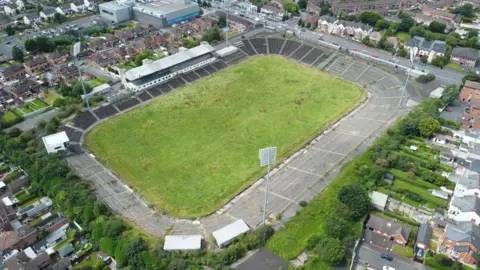
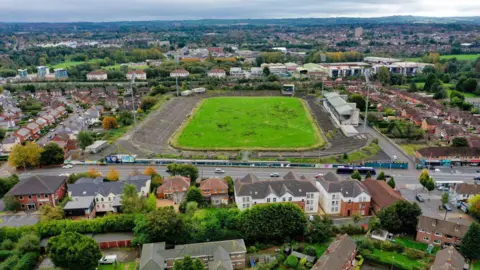
In west Belfast, just a stone’s throw from the busy M1 motorway heading south out of the city, is where Euro 2028, one of the world’s biggest sporting tournaments, was supposed to be hosted in Northern Ireland.
It first opened in 1953 as a stadium for Gaelic games, and has been the home of Antrim GAA since its inception. The official capacity was just more than 31,000, although three-quarters of the ground was terracing.
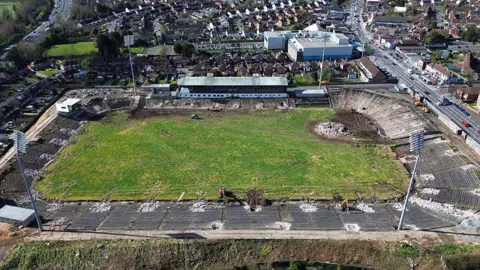
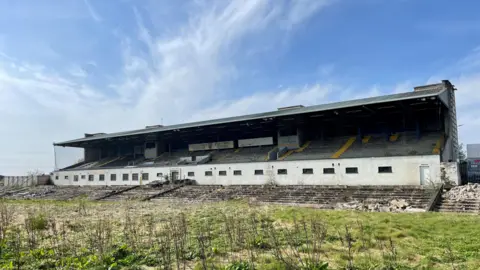
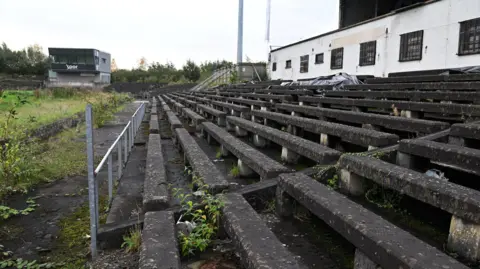
However, there have been no visitors to Casement in more than a decade and, for years, any passing motorists able to crane their neck into the ground would only see a derelict husk.
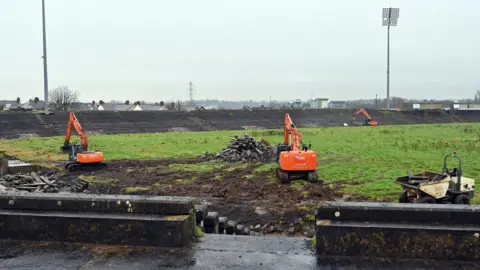
Clearance work did begin at the site in February 2024 in anticipation of the stadium’s construction for Euro 2028 – but the long-running row over who pays for it put paid to Northern Ireland’s hosting hopes.
 GAA
GAAWhat happened to Casement Park and Euro 2028?
Short answer – nothing. And it’s because of money.
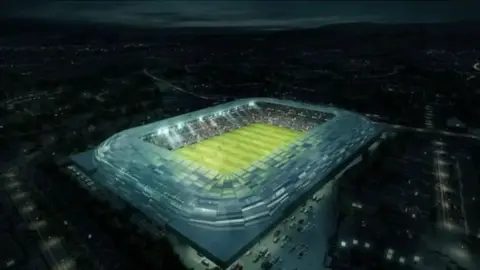
There have been plans to build a new stadium at Casement Park since 2011, long before Euro 2028.
Originally that stadium was to cost about £76m, with £61m coming from Northern Ireland’s power-sharing government and £15m from the Gaelic Athletic Association (GAA).
But those plans got bogged down in a morass of legal rows, safety concerns and planning permission issues.
Hope was rekindled in October 2023 when Casement Park was included as a host venue as part of the UK and Ireland’s successful bid to host Euro 2028.
However, Uefa tournament specifications, which would turn the GAA ground into an all-seater stadium suitable for Euro 2028, meant construction estimates spiralled – at least £300m, and possibly more than £400m according to the UK government (an estimate the GAA said was “wildly exaggerated”).
 Getty Images
It would also have to be ready by summer 2027 – a tight turnaround, although not impossible if the hefty bill could be paid.
The cash-strapped Northern Ireland Executive said it would pay no more than £62.5m and the GAA similarly would not go beyond £15m.
With the Irish government promising €50m (£43m), it was all down to whether the new Labour government was willing to make up the rest.
Last October, judgement was delivered – the UK government would not meet the shortfall and Casement Park would not be built for Euro 2028. Northern Ireland would not host matches as part of the UK and Ireland tournament.
Why didn’t they play Euro 2028 at another Northern Ireland stadium?
Uefa requires that all European Championship stadia have a capacity exceeding 30,000.
The National Stadium at Windsor Park – Northern Ireland’s footballing home – holds 18,500 spectators.
The Irish Football Association (IFA) said there was “no route to fund an expansion” of the ground, despite it being the preference of some Northern Ireland football fans.
When it came to Euro 2028 in Northern Ireland, it was Casement or bust.
 PA Media
What now for Casement and who’s paying for it?
Euro 2028 may be gone, but Casement could live as per its original vision – a state-of-the-art ground that could become the home of Antrim GAA and the host for Ulster finals, major events and concerts.
A reduction in capacity and no requirement to meet Uefa tournament standards means estimated costs have fallen to about £250m-£270m.
But that is still a hefty wedge and the standoff over who will pay has continued, with a little friction at times.
In January, minutes emerged of a “fraught and tetchy” meeting between the GAA and the Northern Ireland minister responsible for sport, Gordon Lyons.
The GAA has acknowledged it will increase its financial commitment to the project and said it was cautiously optimistic ahead of the UK government’s spending review.
 Getty Images
What is the story behind the Casement Park delay?
To answer that question, we have to go back a couple of decades.
At that time, Northern Ireland’s three main stadiums for football, rugby and GAA – Windsor Park, Ravenhill, and Casement – were seen as increasingly not fit for purpose.
Money and a new plan was needed.
Initially, Northern Ireland’s power-sharing government – the Northern Ireland Executive – came up with an idea for a new, multi-purpose national stadium for all sports.
 Getty Images
But the divisive proposal of situating the stadium at the site of the Maze Prison – which held paramilitary prisoners during the Troubles, Northern Ireland’s bloody conflict of 30 years – meant the idea was eventually dashed on the political rocks.
So instead, in 2011, it was decided that cash would go towards stadium redevelopment:
- Windsor Park, the home of Northern Ireland’s international football team and Linfield FC, would get £25m to build a 18,500 all-seater stadium – it reopened in October 2016
- Ravenhill, the home of Ulster Rugby, was redeveloped and capacity increased to 18,000 at a cost of £16.5m – work finished in May 2014
- About £36m would be set aside for sub-regional football stadia aka grounds used by local football club
- And Casement Park would get £61m – the same amount as football in total – for a new 38,000 capacity stadium
While Ravenhill and Windsor – or the National Stadium as it is now officially known – are open and hosting big events, Casement Park has only seen a digger or two.
Why has the Casement Park redevelopment taken so long?
 Getty Images
In 2012, stadium designers were appointed to the project and it was expected the new Casement Park would be built by 2015. But it did not turn out that way.
The first big obstacle came in 2014, when the High Court overturned planning permission for the project.
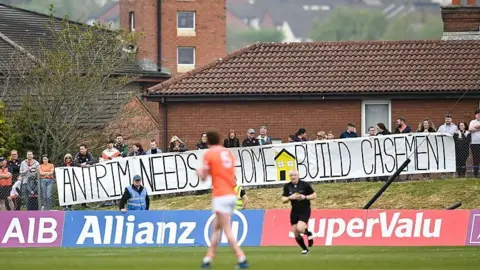
Local residents had lodged a legal challenge over objections to the stadium’s size – they said it would block out light from homes and cause serious traffic disruption.
Then, in 2015, came possibly the most contentious year of the Casement Park project.
Firstly, it emerged that a Safety Technical Group (STG) formed to oversee safety issues around the new stadium had not approved the design plans due to concerns over how long it would take people to leave the ground in an emergency.
Later, one of the STG members, safety expert Paul Scott, told a Northern Ireland Assembly committee that he had been put “under pressure” to approve the plans by government officials.
He also complained of bullying – he later settled an industrial tribunal case with Sport NI.
What else do we need to know about Casement Park?
Well, as ever, if Casement Park does get extra money from government, you can be sure other sports will be asking why they cannot get the same treatment.
For years there has been frustration among local football fans over stadium money of a different kind – when cash was announced for Casement, Windsor Park and Ravenhill more than a decade ago, £36m was set aside for what were described as sub-regional football stadia.
Most football league grounds in Northern Ireland are in dire need of redevelopment.
But that fund only opened for applications at the start of this year, after delays caused by years of political instability. No money has been distributed yet.
 Pacemaker
As the original stadium plan put Gaelic games and football on an equal funding basis, it is likely football authorities will be asking questions should the government offer extra cash for Casement.
The issue is also further complicated by how sport and politics intertwine in Northern Ireland.
Unionism and the GAA have long had an uneasy, distrustful relationship.
One of the GAA’s own stated goals – “the strengthening of national identity in a 32-county Ireland through the preservation and promotion of Gaelic games and pastimes” as per the organisation’s official guide – puts it and unionism in political opposition.
Casement Park itself is in predominantly nationalist west Belfast and named after after Sir Roger Casement, an Irish revolutionary who, in 1916, was executed in London for treason.
 PA Media
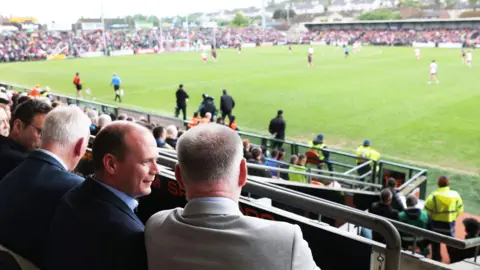
However, DUP minister Gordon Lyons attended his first GAA match last month in a move seen as highly symbolic given its timing close to the UK government’s spending review.
That optimism may be most keenly felt by the stadium’s long-term tenant, Antrim GAA, who have essentially been left without a fit-for-purpose home ground thanks to its dereliction.
So what next for Casement Park?
The short answer – get the money, get the stadium built and file the Casement saga into history.
The long answer? It remains to be seen how much the UK government, GAA or any other source will put on the table to pay for the stadium – and with a shortfall of about £150m, it will require some serious largesse.
However, there is no doubting the political will of the GAA, supported by Northern Ireland’s biggest political party Sinn Féin, to get Casement built.
A gesture today from the UK government could bring things a step closer to reality.
