



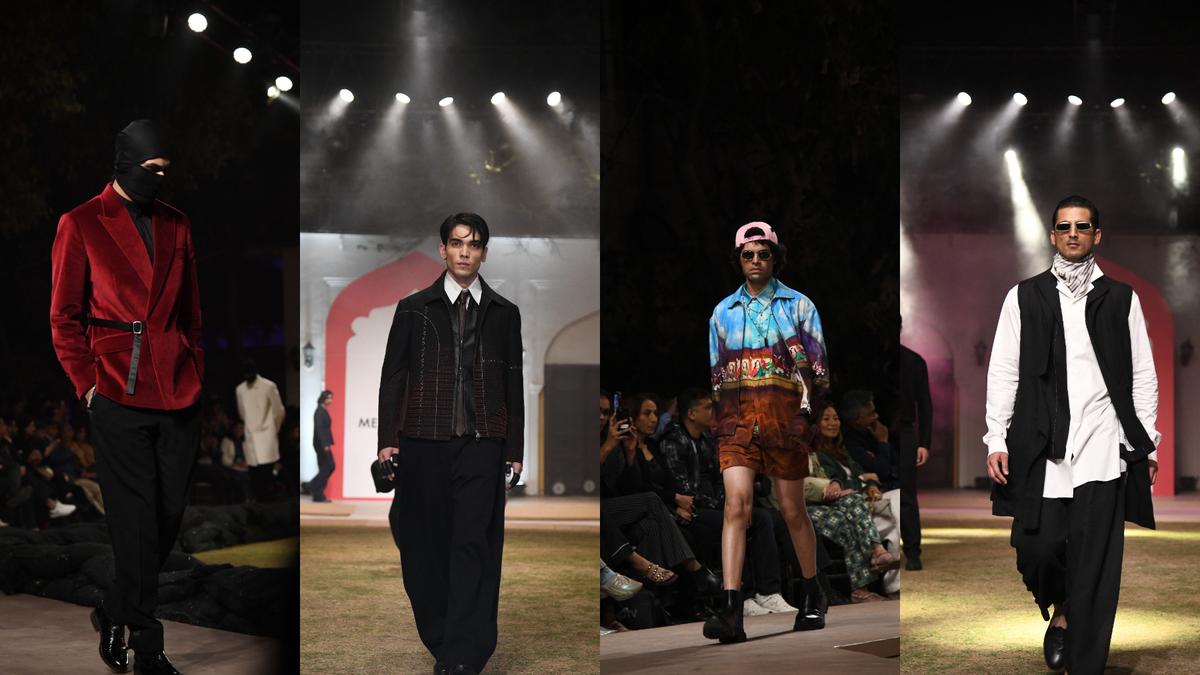
At Jaipur’s Diggi palace, the high ceiling of the durbar room, the serene lawns and the calm poolside play quiet witness to all the hustle; of fashion choreographers dispensing instructions, models awaiting their turn, or lounging on the seats being readied for the evening’s shows, and designers darting between the ramp and the green rooms.
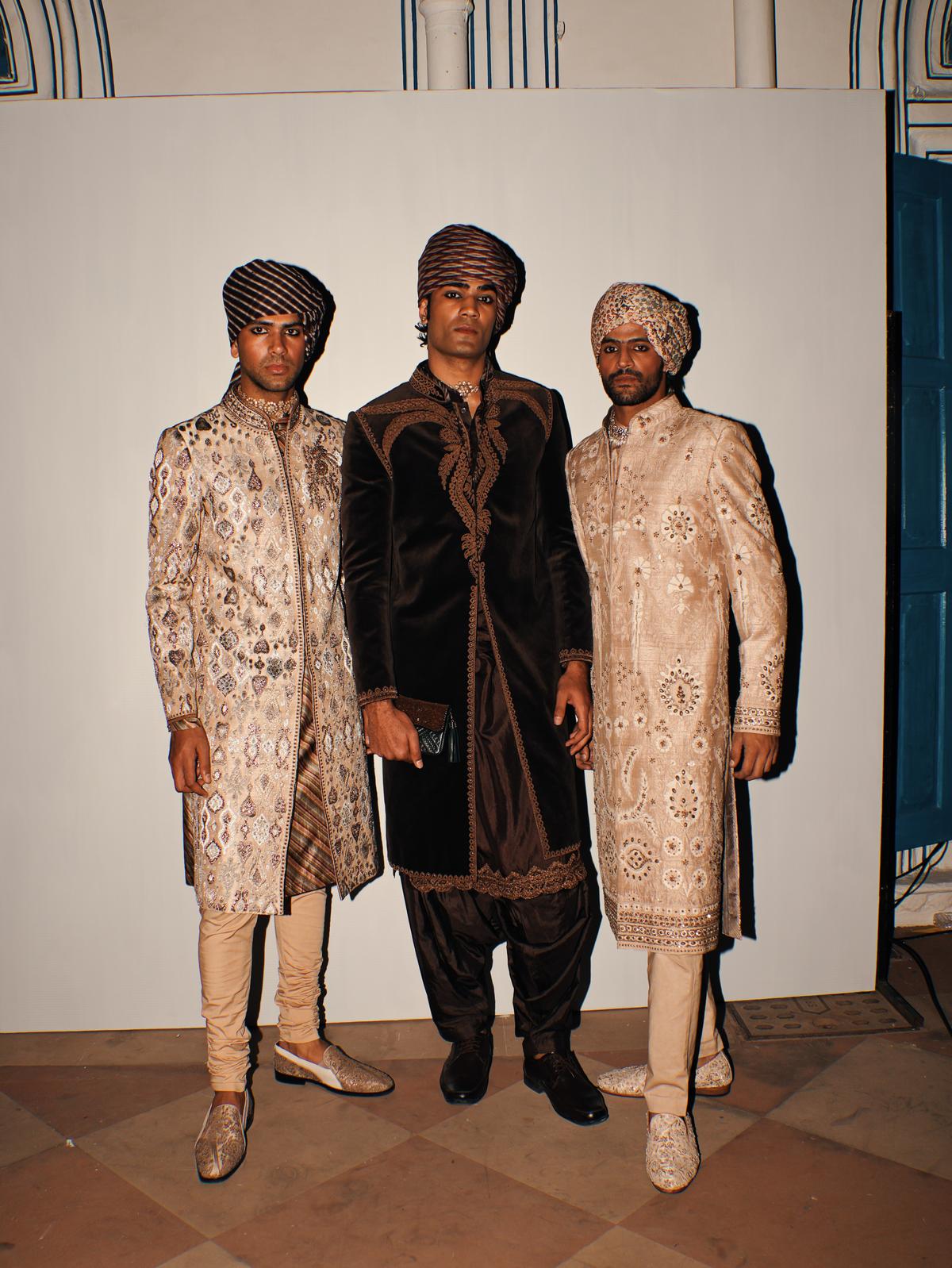
JJ Valaya’s collection for India Men’s Weekend
| Photo Credit:
Special Arrangement
For the Fashion Design Council of India (FDCI), this is the fourth year of bringing designers from across the country who are pushing boundaries and expanding the vocabulary of menswear as a part of House of Glenfiddich presents FDCI India Men’s Weekend. JJ Valaya, Ashish N Soni, Abraham and Thakore, Rajesh Pratap Singh, Inca, Mr Ajay Kumar, Son Of A Noble Snob, Vivek Karunakaran, Dhruv Vaish, Sahil Aneja, Antar Agni, Felix Bendish and more were a part of the line up this year; a mix of celebrated designers and emerging talent.
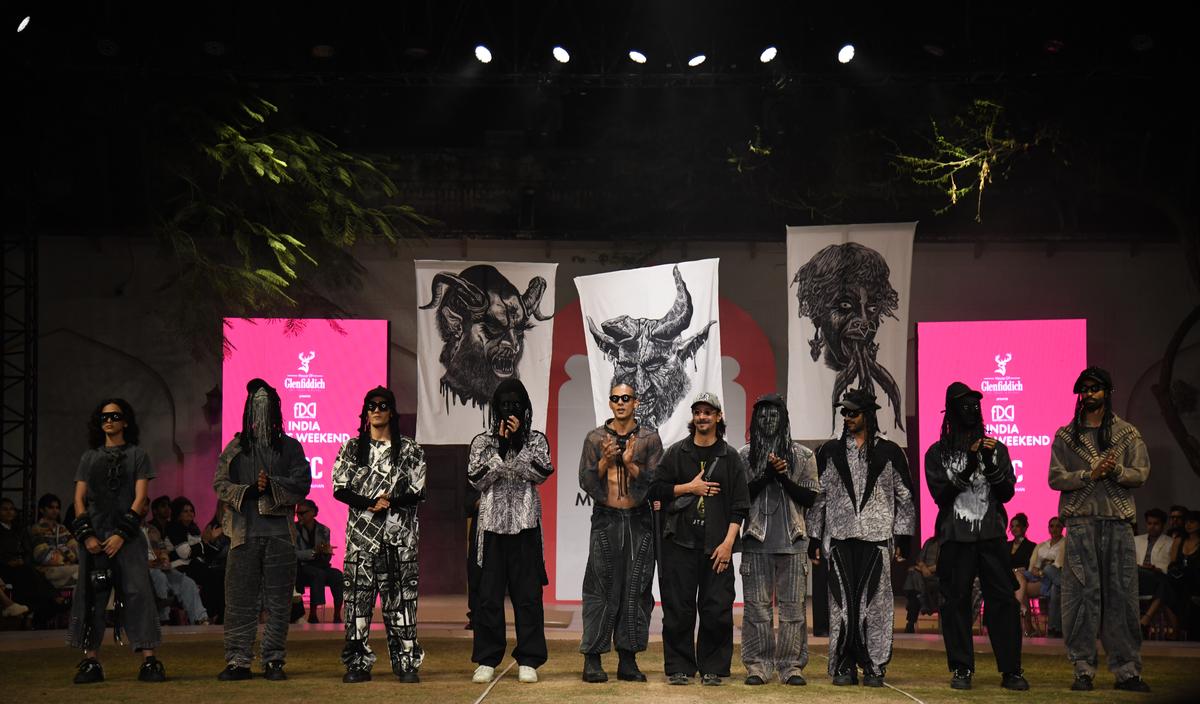
Nitin Bal Chauhan’s line inspired by the tale of Gugga from Chamba
| Photo Credit:
Special Arrangement
This year, the drama extended beyond flowy silhouettes, power shoulders and glittering embellishments, as the ramp became a stage for performance art, storytelling, and impeccably curated music. If Nitin Bal Chauhan’s collection which drew inspiration from the folk tale of Gugga from the Chamba region had models in masks walk to roars and drum beats, Varun Dagar brought his fluid moves to ‘Zombie’ by The Cranberries at Rajesh Pratap Singh’s sombre, reflective show.
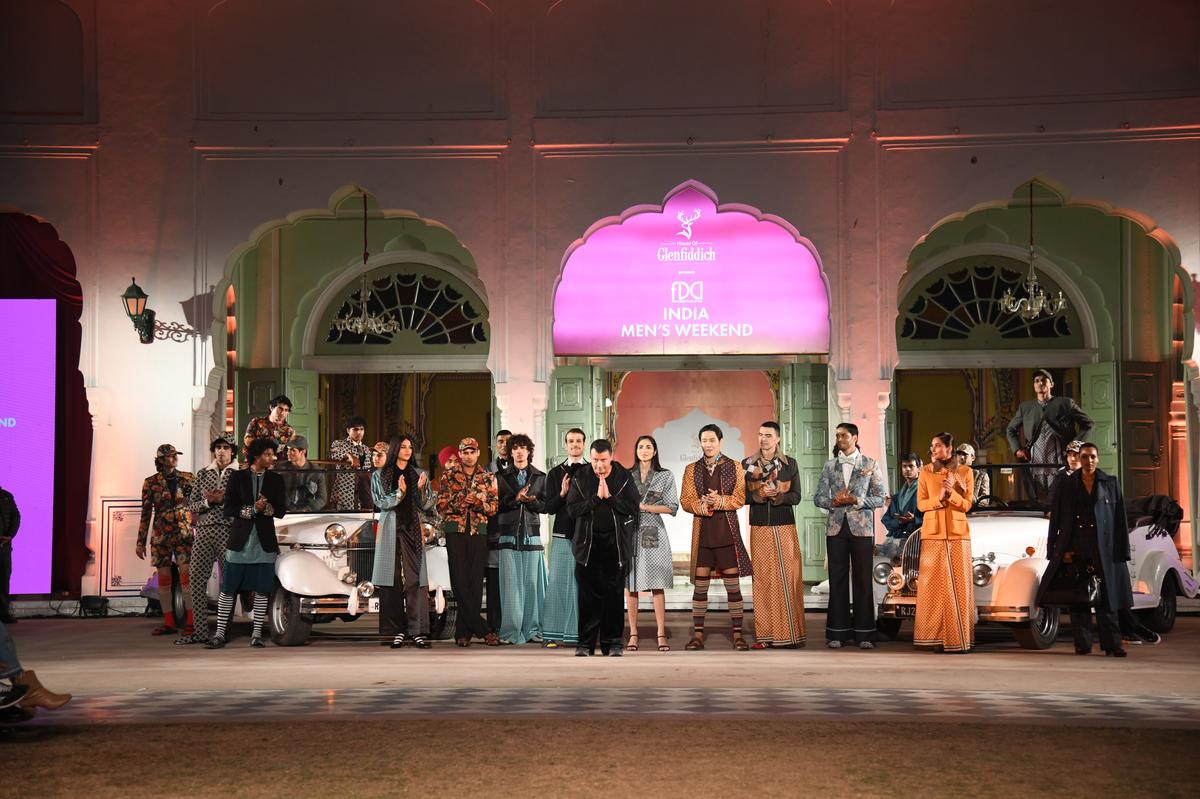
Relaxed shirts, wraparound dhotis, soft jackets and more in earthy tones made up Ashish N Soni’s contemporary menswear showcase
| Photo Credit:
Special Arrangement
Sunil Sethi, president, FDCI, emphasises on their commitment to present diverse contemporary menswear from 23 established and emerging designers. “I am just lucky that men’s fashion is all over the country, with designers from across cities being able to showcase here, as well as different choreographers working on the shows,” he says.
We bring you the highlights from the shows, and meet the designers for the low-down on what you should be adding to your closet this year.
Countrymade by Sushant Abrol
‘Nostalgic Utility’ is how Sushant Abrol describes Foundry, his latest collection. A card describing his intriguing and inventive collection comes with Foundry Object No.01, a metal motif from a jerry can that holds fuel for military jeeps, that Sushant wants us to hold, remove and rotate.
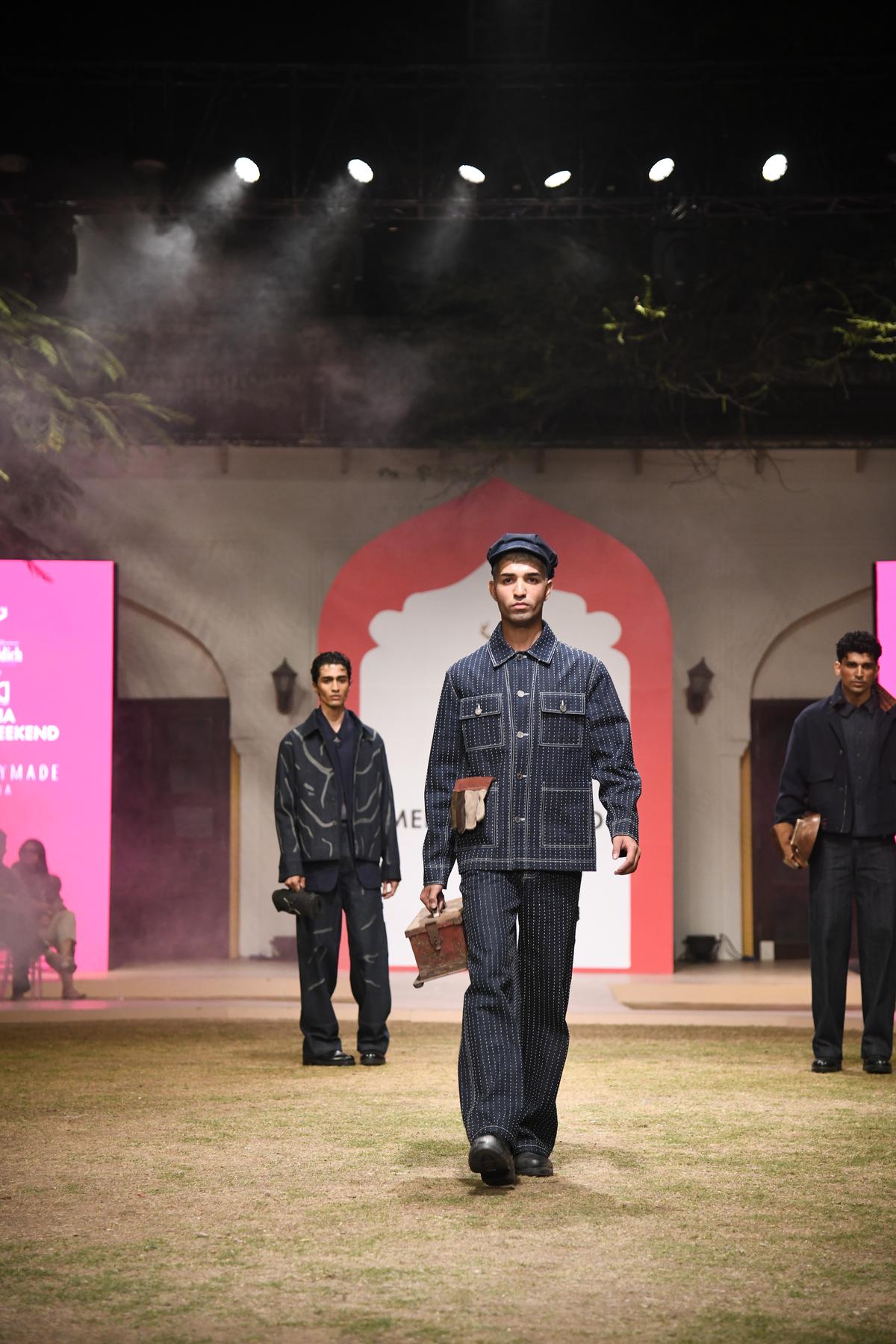
From Foundry, by Sushant Abrol
| Photo Credit:
Special Arrangement
“A foundry is a place where you melt metal, reshape and remould it. For us, this object symbolises the brand’s journey wherein it fuels the everyday expeditions you take in life,” he says.
Taking cues from workwear and adding tactile elements to make the clothes more interactive; to touch and discover, Foundry has chore jackets, truckers, bomber jackets, and soft blazers. The denims come with hickory stripes crafted using the brand’s signature French knots, embroidery on jackets that represents metal melting, and ikat used to represent a heat map of temperatures in a foundry through ochres, reds and blues. “We come from a land of rich cultural heritage and at the same time, as a brand, I feel it is my responsibility to reprogramme these crafts,” says Sushant. The foundry’s aesthetic extends to the accessories as well, and models walk by holding metal tool boxes and welder’s masks.
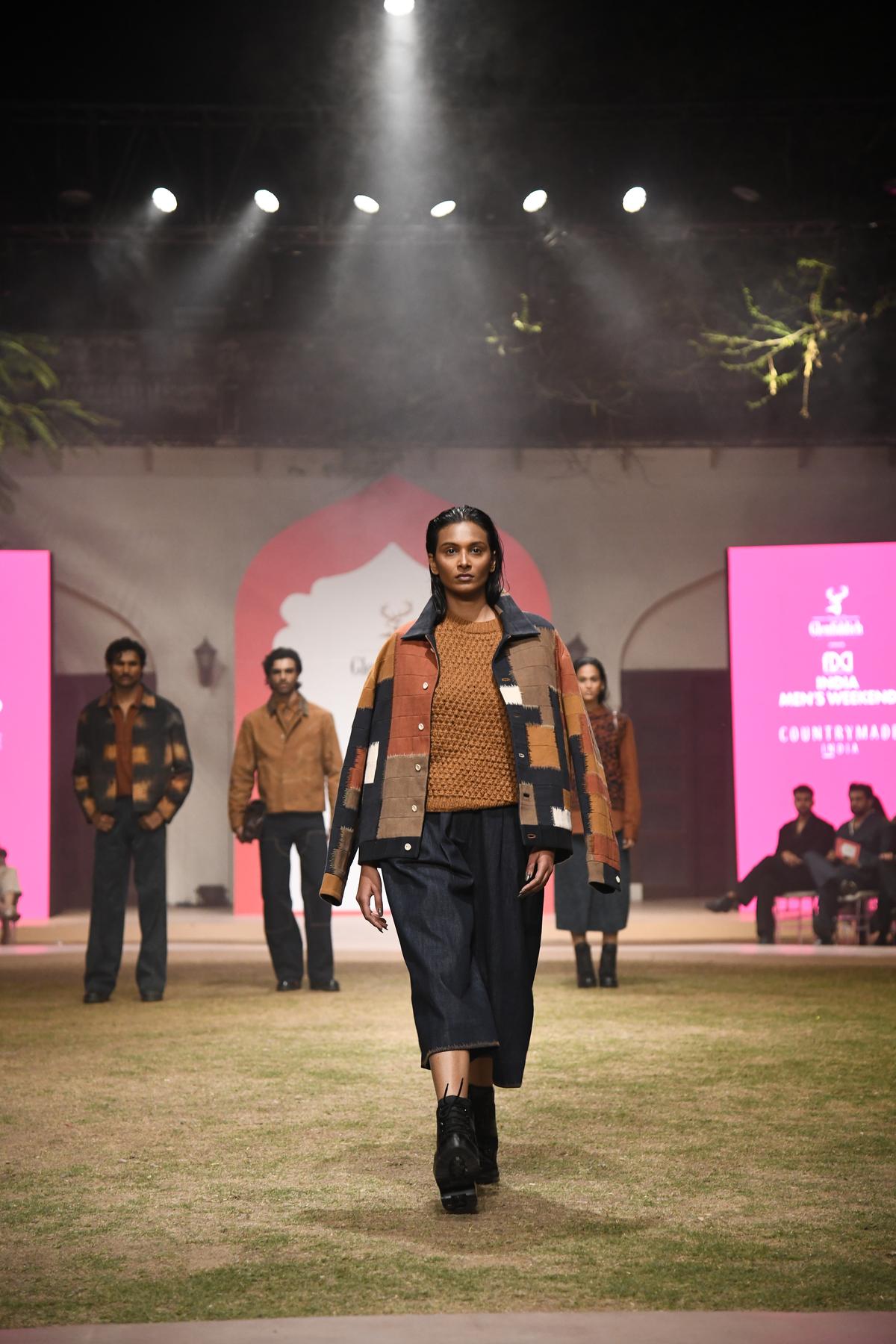
Foundry represents the journey of Sushant Abrol’s Countrymade, and stands for Nostalgic Utility
| Photo Credit:
Special Arrangement
On the ramp, the colours travel; from blues to ochres, reds and whites, and then greens before finally ending with browns and ash. “The heat has simmered down and the outcome isn’t about the object that has been made in a foundry, but the journey itself,” Sushant adds.
Abraham & Thakore
The designer duo’s collection, Sartorial Sarongs, makes a literal splash, opening with two models emerging from a swimming pool. The robes they wear soon give way to lungis and mundus, an everyday garment across the country, re-imagined in a classy black and white colour palette with circular motifs, pinstripes, line prints, quirky paperclip motifs as well as a nod to Jaipur with Hawa Mahal featuring on the garments as well. A rolled up newspaper in the hand, is a casual accessory here on the ramp.
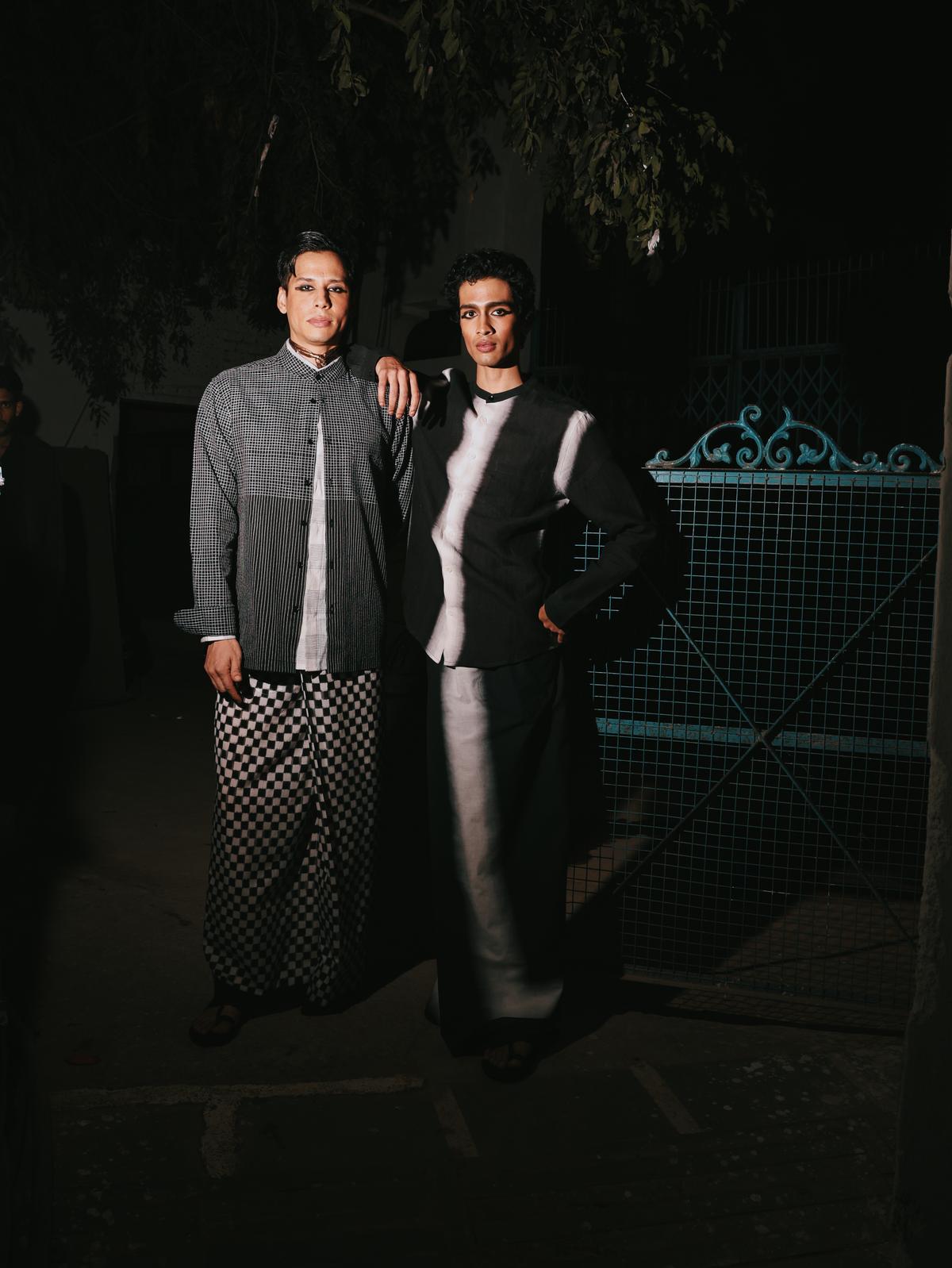
Saratorial Sarongs puts a spin on the everyday lungis and mundus
| Photo Credit:
Special Arrangement
“Lungis and mundus can be a very elegant substitute for trouser dressing. I also like the political implication of it because it sort of questions colonial attitudes and how we have been indoctrinated to believe there is only one correct way to dress,” says David Abraham.
With drawstrings, belt loops and pockets, the sarong here is for all occasions, and the collection features jazzed up versions as well. Parties and weddings this year are hopefully going to see quite a bit of the sequinned mundus in black, and a showstopping gold, crushed silk shirt and mundu set.
Vivek Karunakaran
The unmistakable beats of ‘Kannodu Kanbadhellam’ from Jeans makes the audience sit up even before Vivek Karunakaran’s showcase begins. For the designer, Thangam, his latest collection is a continuation of Idam, his last collection which he considers a celebration and a movement. “We fearlessly represented who we are and our roots. If Idam was a book, Thangam is now one of its chapters,” he says.
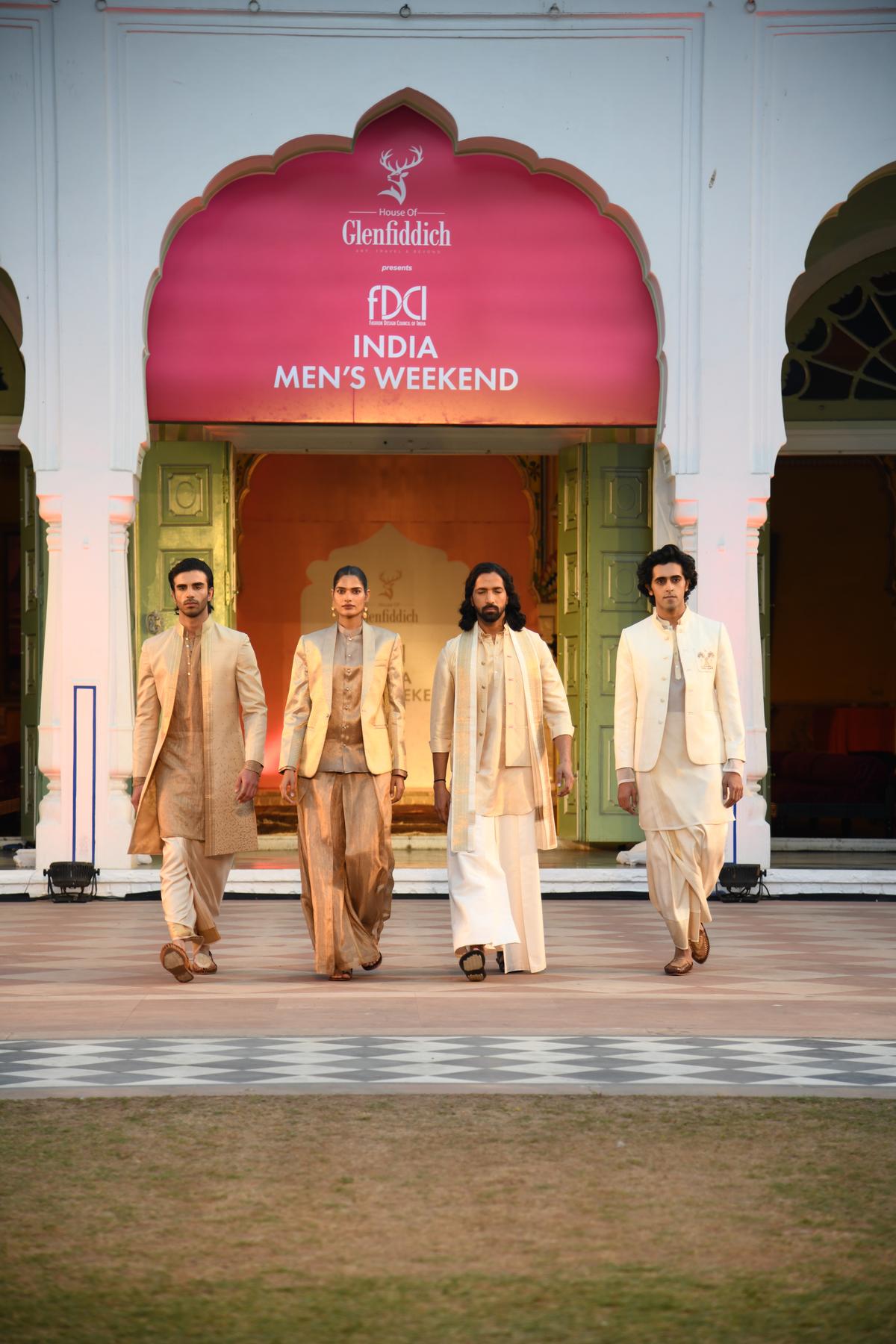
Silks and understated opulence from Vivek Karunakaran’s Thangam
| Photo Credit:
Special Arrangement
True to its name, Thangam shimmers as models step onto the runway wearing veshtis, waistcoats, flowy pants and bandhgalas in Kanjeevarams, raw silks, tussars and organza. “The gold here is quiet and not in-your-face, we have played around with the element as well and it is crushed, textured and in organic lines,” Vivek says. Not limiting the colour palette here to creams and an organza gold, Vivek has the models don rich jewel-toned reds and pinks, subtle maroons and blacks. While flowy pants in gold match up effortlessly with a kurta and a soft blazer, panchakachams and angavastharams pair just as well with bandhgala-style open jackets, all on the ramp as strains of ‘Ponmagal vandhal’ play.
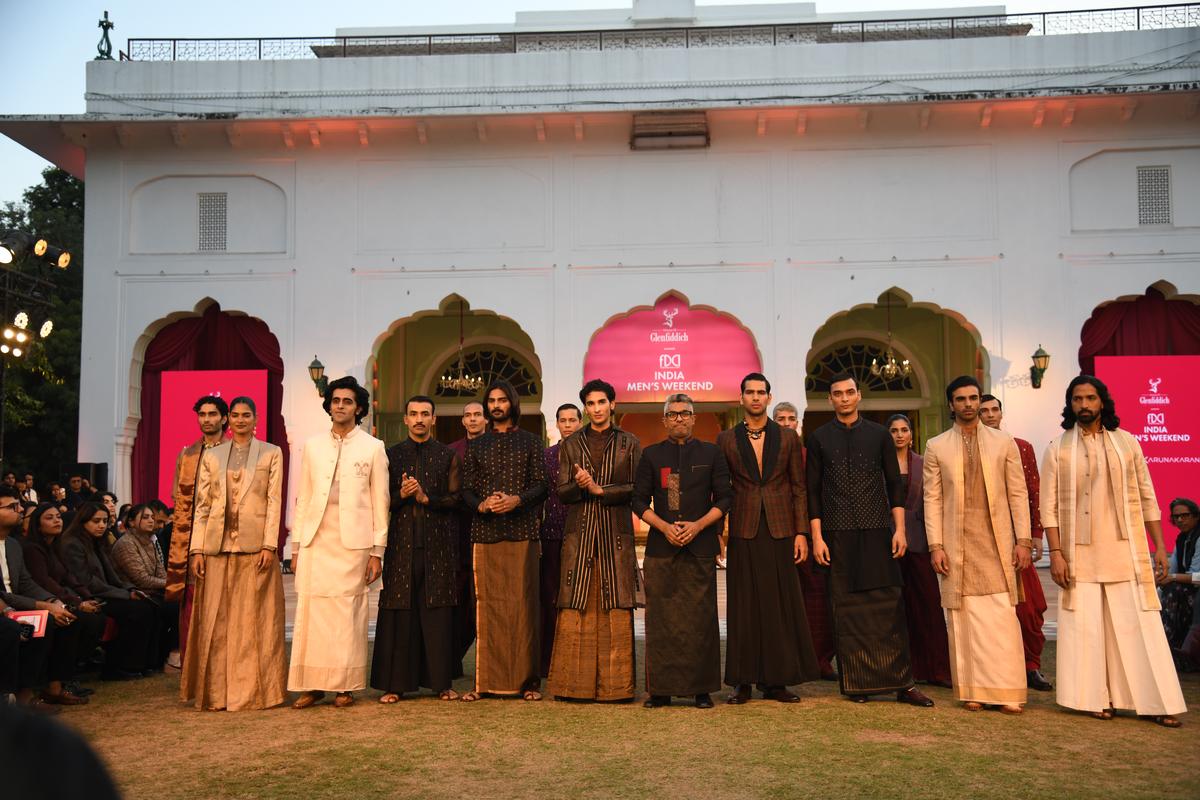
Vivek Karunakaran, at the showcase
| Photo Credit:
Special Arrangement
Vivek also shares a personal connection to the collection — his mother’s name is Thangam. “For me, it was important to move away from viewing gold simply as ornamentation and instead see it as a language of love. For generations, gold has been treasured and passed down, holding deep emotional significance within families,” he adds.
Inca
“I work with craft on a very basic level. My attempt is to make it a part of your daily life and not reserve it for special occasions,” says Amit Hansraj of Inca.
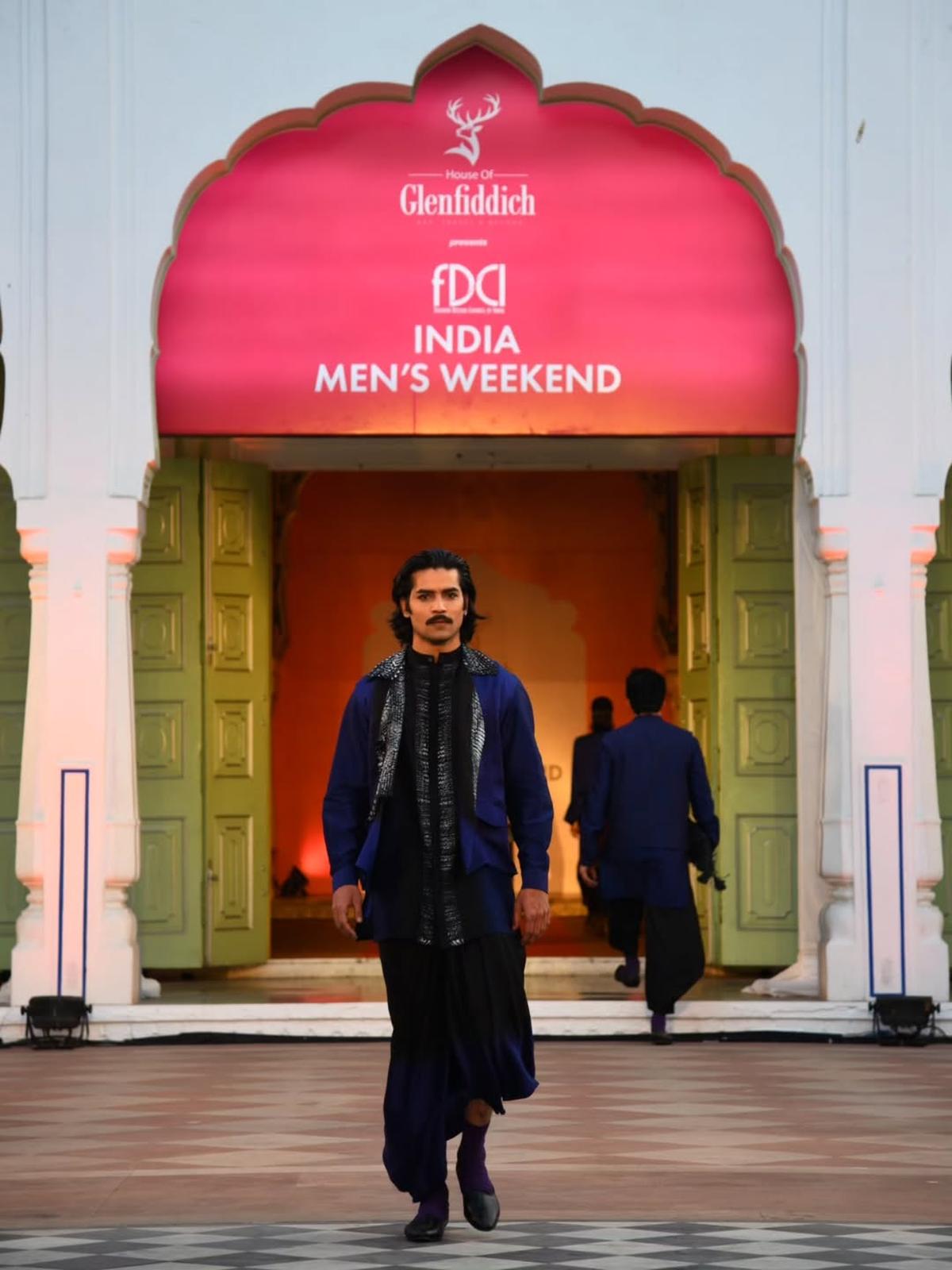
Flowy silhouettes from Amit Hansraj’s Inca
| Photo Credit:
Special Arrangement
In flowy pants, dhotis, short kurtas, jackets and shirts, Amit’s collection at the India Men’s Weekend with bandhani and shibori influences popped on the runway in glossy browns, buttery ochres and bright blues. “My collection traces the journey of a dot, as it expands and shifts in shape. We start with the minute bandhani dots, and slowly branch out into bolder shibori prints; much like how you put an ink blot on a drop of water,” Amit explains.
Flowy dhoties come paired with short, sharply tailored kurtas and shirts layered on with jackets. The accessories here; chunky necklaces and a blue fringe bag with shibori work also makes heads turn. “I design a bunch of separates and put it all together, so it looks interesting, cohesive and unique in its own way,” Amit says.
Siddartha Tytler
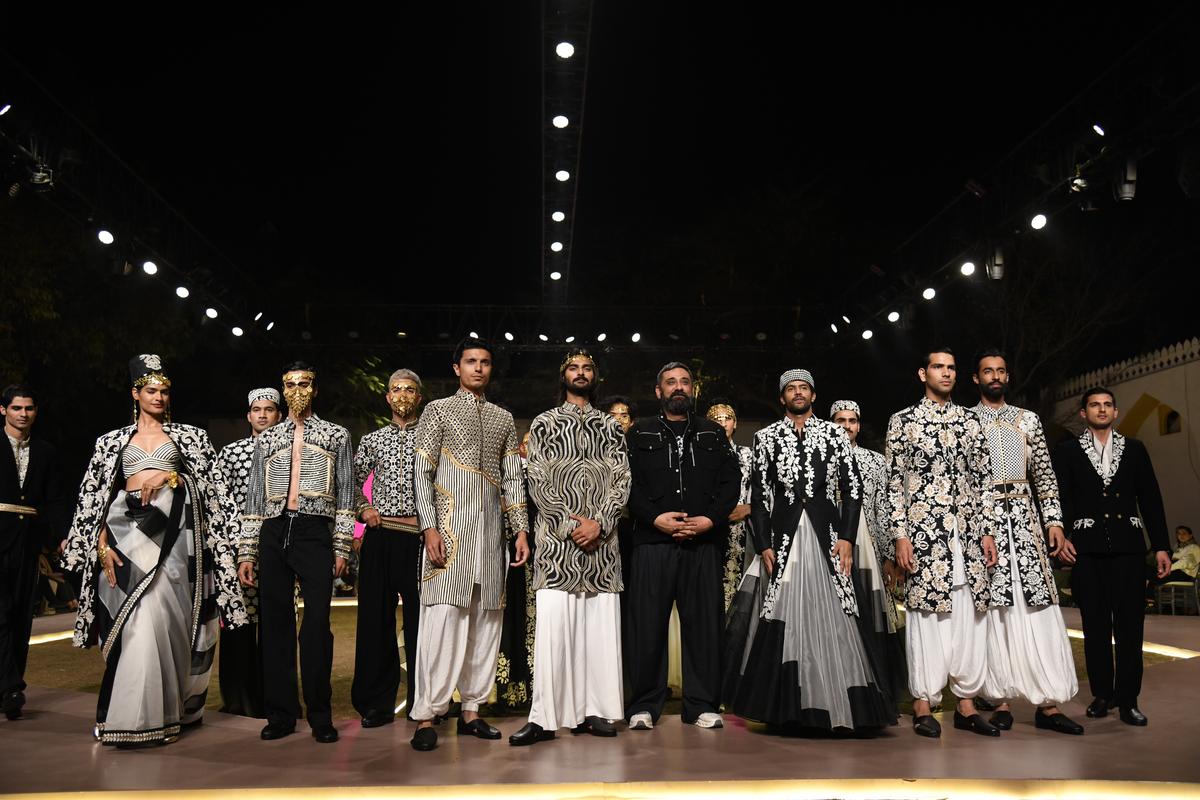
Siddartha Tytler’s Miraas spotlights a reimagining of the Parsi gara threadwork
| Photo Credit:
Special Arrangement
The runway is illuminated in stripes of light for Siddartha Tytler’s showcase and in the spotlight is Parsi gara thread work, reimagined in his collection Miraas. “It is such a beautiful culture and tradition, with such intricate and beautiful work which you do not see very often now. We have modernised and attempted to bring it back in the open,” the designer says.
Sharply tailored black-and-white kurtas and achkans in silk organza and raw silk feature intricate threadwork, elevated with mirror work and appliqué that glints under the lights as models take over the runway to a remix of Britney Spears’ ‘Toxic’. The show’s brisk pace does not detract from the details; the striking thread work executed by a team of artisans in-house who will also be working on future collections, is exquisitely detailed.
“A general rule is, if you want to get noticed, come to me,” Siddartha laughs.
Nikita Mhaisalkar
Nikita Mhaisalkar did not have to look further than her hometown of Sidhpur in Gujarat, with its Victorian havelis, pastel colours and migratory birds for inspiration for her newest collection, Nostalgia. “Not many people know about the town’s beautiful havelis, which do not look like a part of India. I wanted to work around this aesthetic, the vibe, and its pastel colours,” she says.
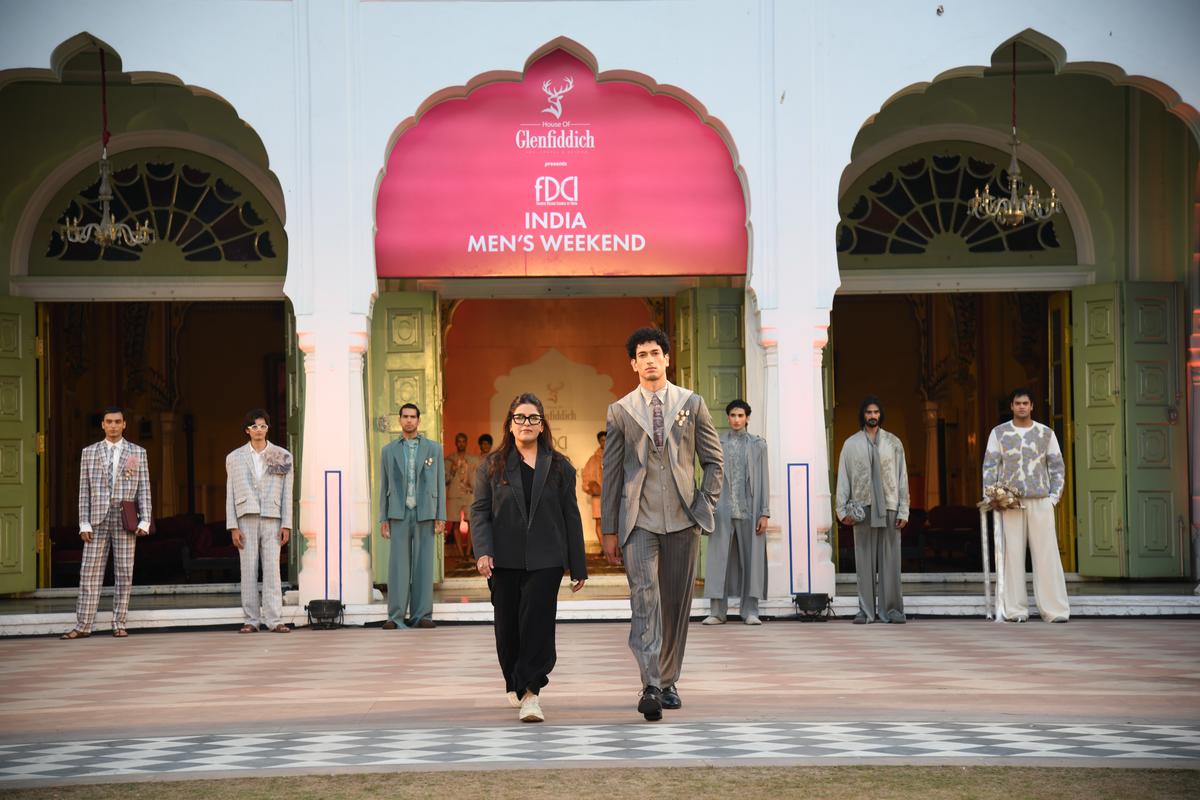
Nikita Mhaisalkar’s collection inspired by her hometown of Sidhpur
| Photo Credit:
Special Arrangement
Fluid and yet sharp, well-cut garments that Nikita describes as “very French, very Victorian and very smooth”, with couture embroidery inspired by the motifs and carvings from the havelis make up Nostalgia. Models strut down the runway in the evening light, with suit sets, flowy shirts and pants and feathery neckties in pastels accentuated with cameo brooches, which Nikita has an interesting sourcing story for as well.
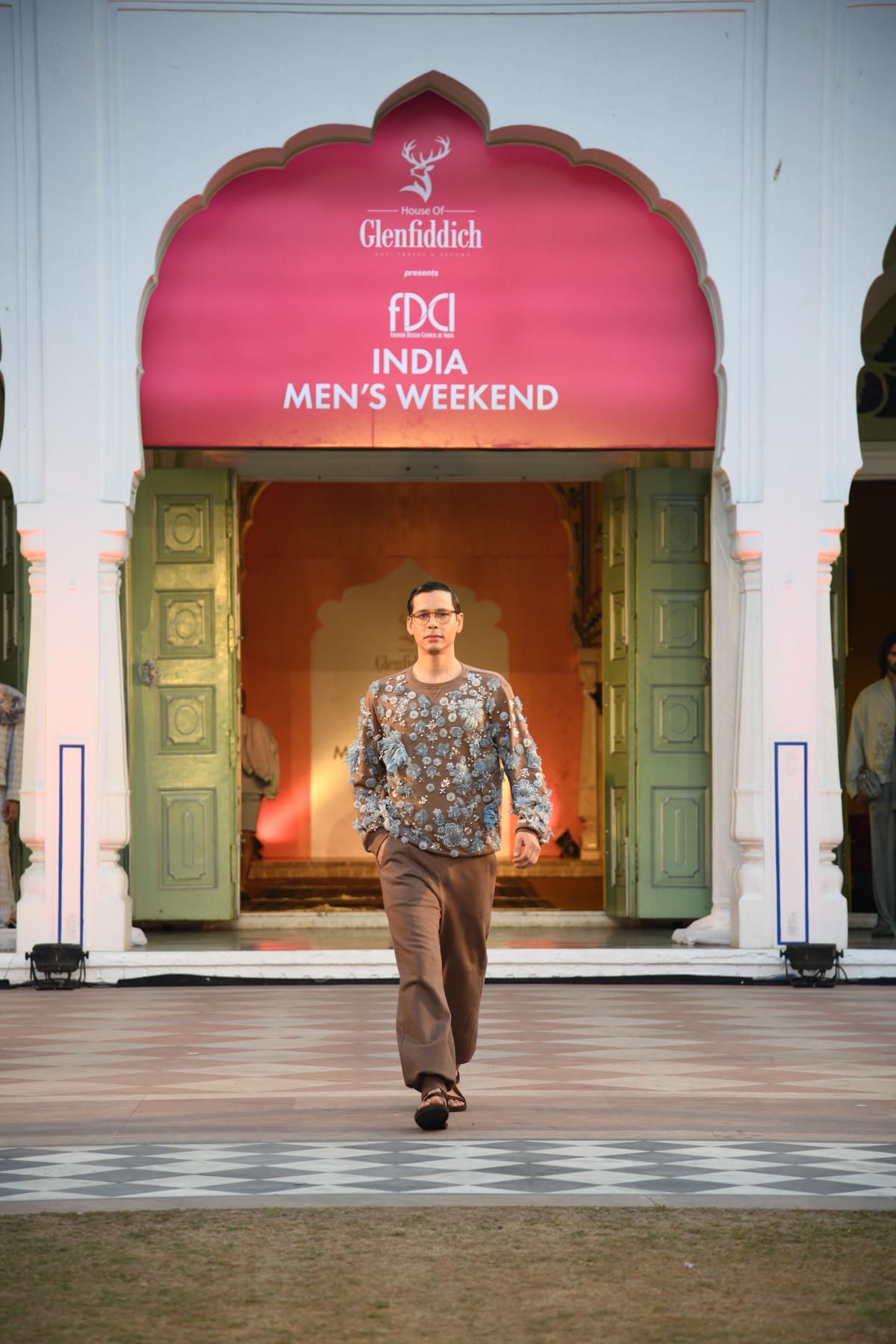
Confectionery pastels make up Nikita’s collection
| Photo Credit:
Special Arrangement
“I met someone in Sidhpur who collects these brooches which are extremely old. They were kind enough to lend it to me for the show,” she says. She brings Sidhpur’s whimsy to her showstopper outfit, a sharply-tailored pinstripe suit in forest green worn with a feathered necktie and a collection of brooches.
Til by Ankur Verma
In beige, earthy greens and browns and pops of bright orange, Til by Ankur Verma’s latest collection Breathe plays around with handwork and textures while keeping the brand’s zero-waste, sustainable philosophy in the forefront.
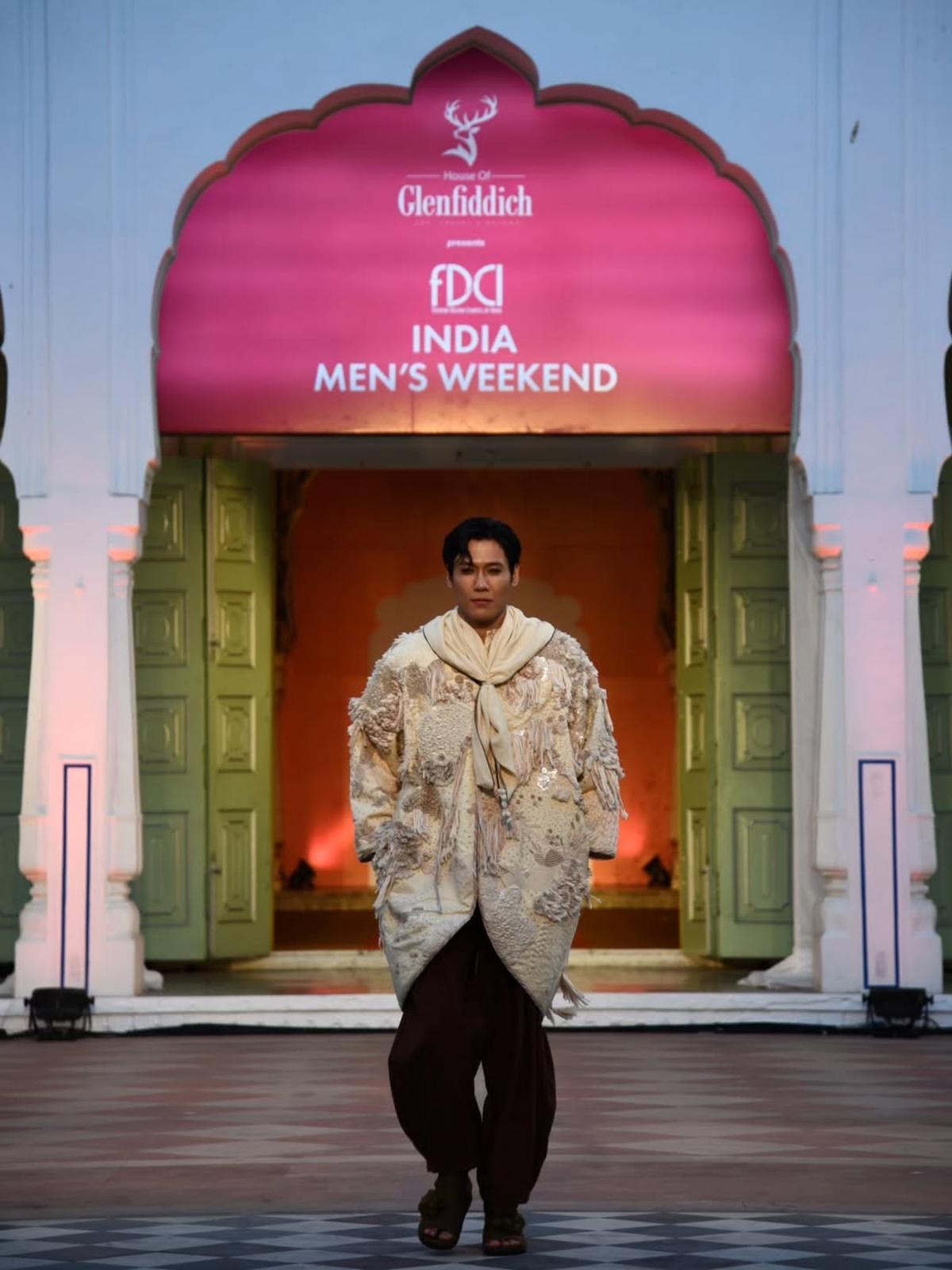
Textures and intricate work define Ankur Verma’s collection, Breathe
| Photo Credit:
Special Arrangement
A textured, drop-shoulder jacket in beige, the first garment in the showcase on the runway, is a piece so rich in texture that you wish you could examine it closer to admire the craft that has gone in. This piece, Ankur says, has been completely made of upcycled material.
“My brand is inspired by skin textures and I wanted to do something creative. From wrinkles, freckles and moles, everything takes shape here on the garment through applique work, embroidery, and raffla work,” Ankur says.
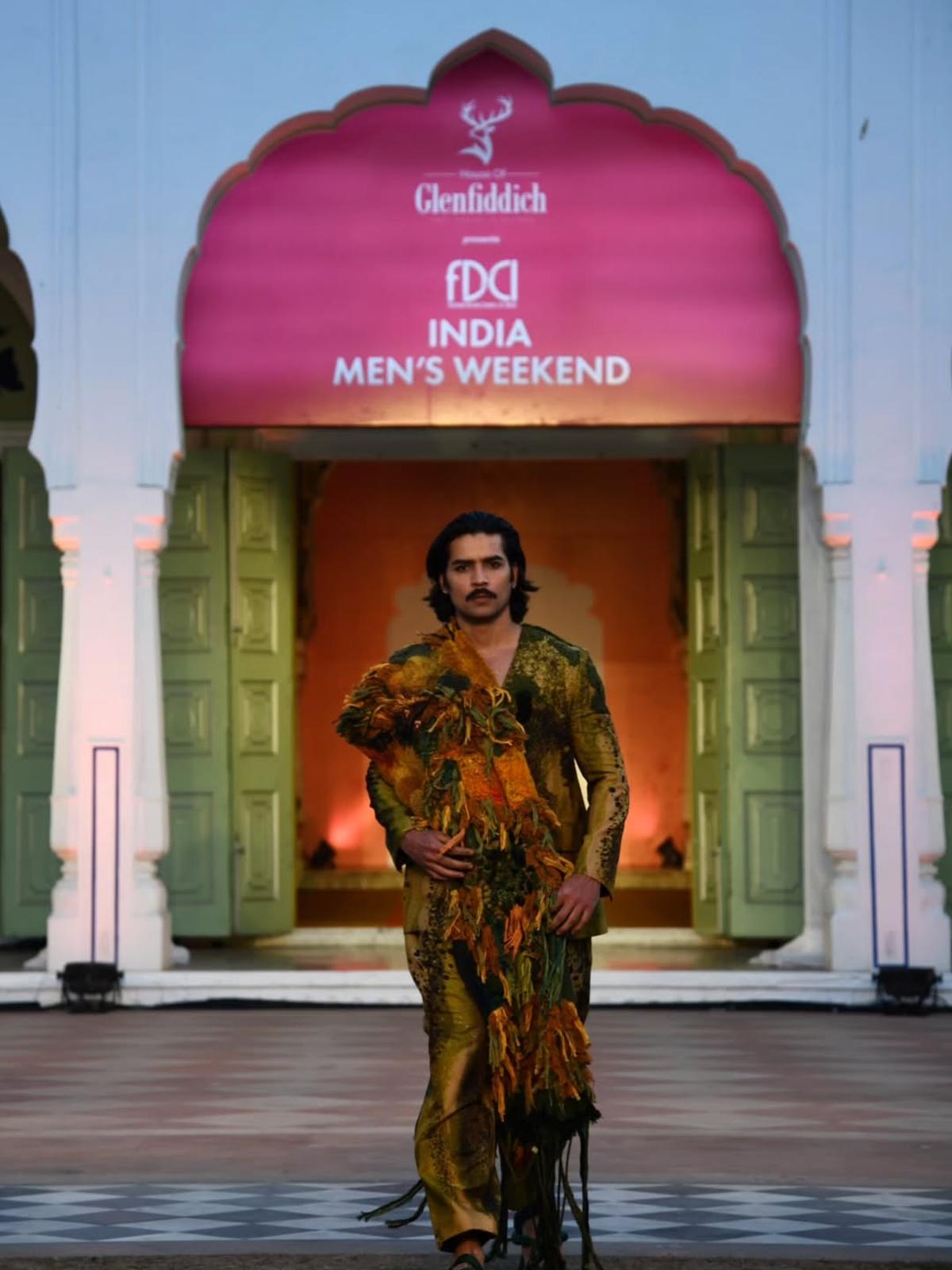
From Breathe, by Ankur Verma’s Til
| Photo Credit:
Special Arrangement
Relaxed fits, soft long jackets, hoodies, capes, shrugs and kurtas feature in the collection, versatile pieces which Ankur says can be styled separately, layered, worn over denims, or with scarves and stoles added as one wishes.
Son Of A Noble Snob
Mani Shanker Singh of Son Of A Noble Snob says he loves challenging norms. “Why should a summer palette only have certain colours?” he asks. His collection Contra, fuses military, sport and grunge, in silk, Chanderis and linens, with Japanese influences and also features hand embroidery like his previous collections.
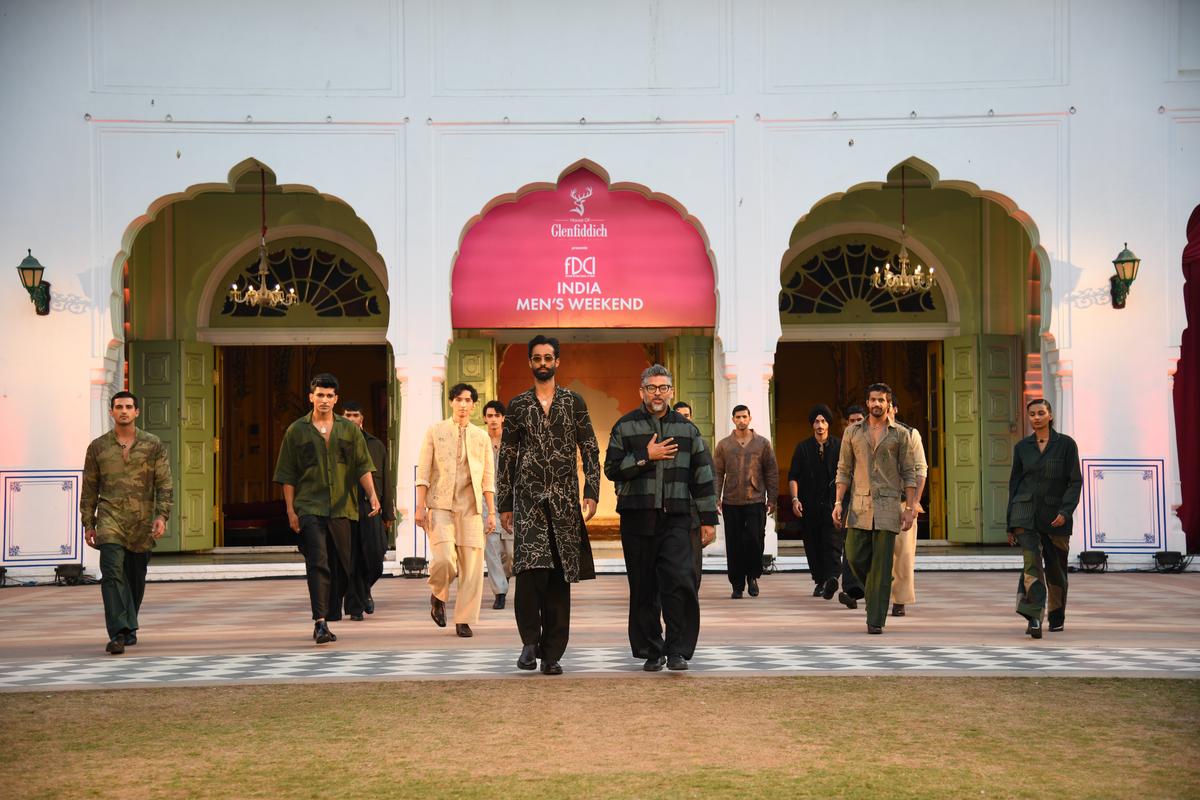
Military, grunge and sport come together for Contra
| Photo Credit:
Special Arrangement
With camouflage print kurtas, epaulettes, sharp collars and front pockets, as well as flowy pants in greens, browns, charcoal and black taking over the ramp, Mani says that his focus is on modern, hip global aesthetics, but while retaining a bit of Indianness at the same time.
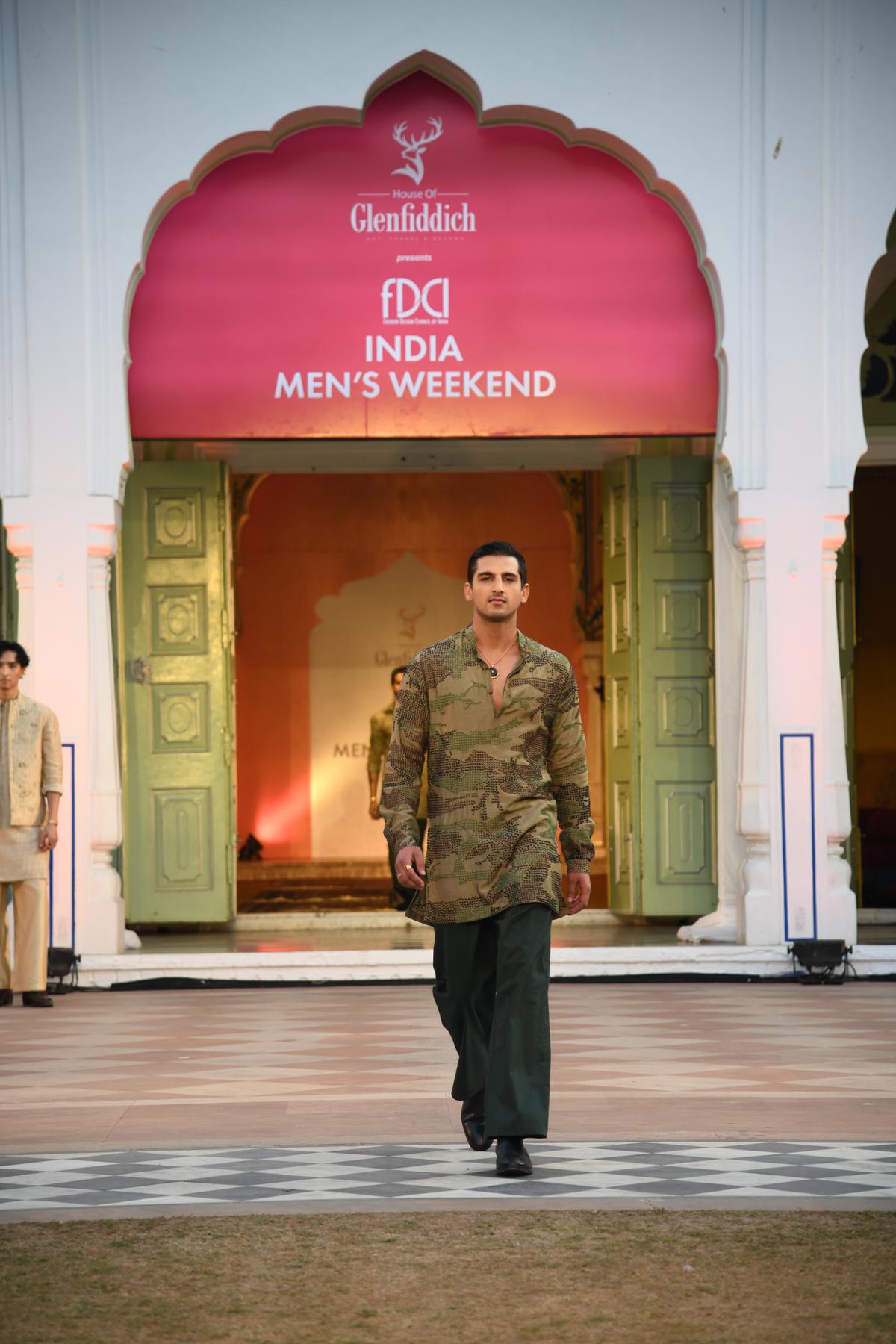
From Contra, by Son Of A Noble Snob
| Photo Credit:
Special Arrangement
“I feel like so many cultures and trends are getting blurred, and coming together. Contra as well, wants to bring this all together and make it seamless. With everything happening in the world, I think as an artist and a fashion designer, it is our responsibility to do this,” Mani says.
