



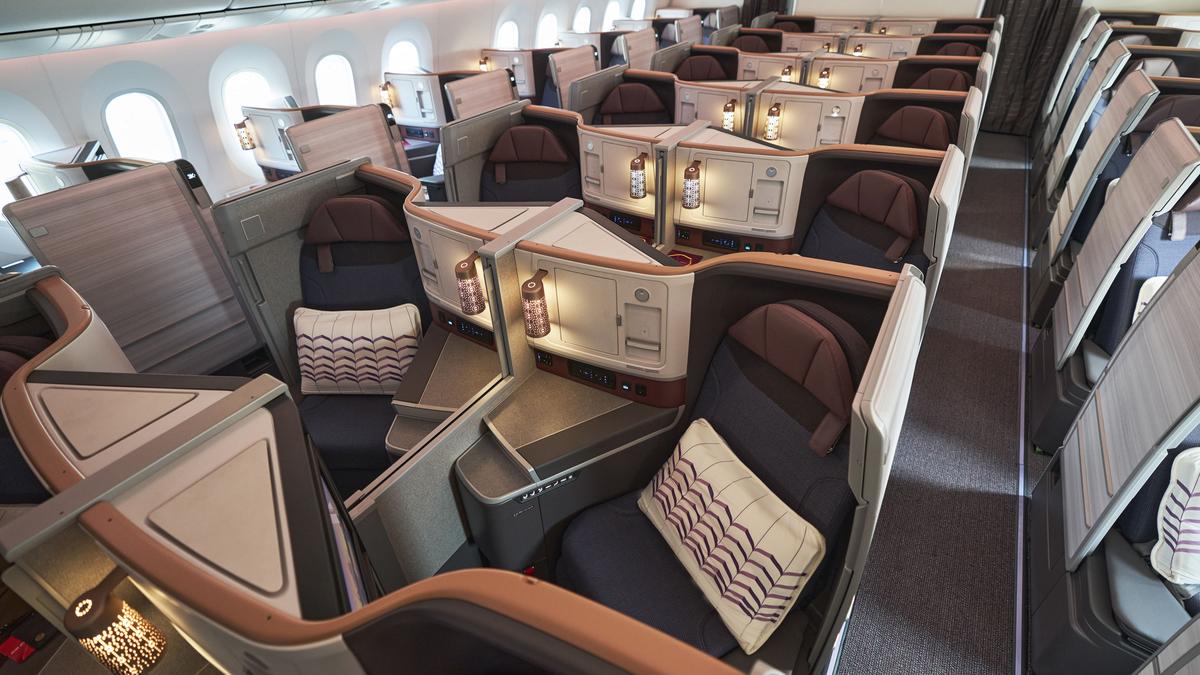
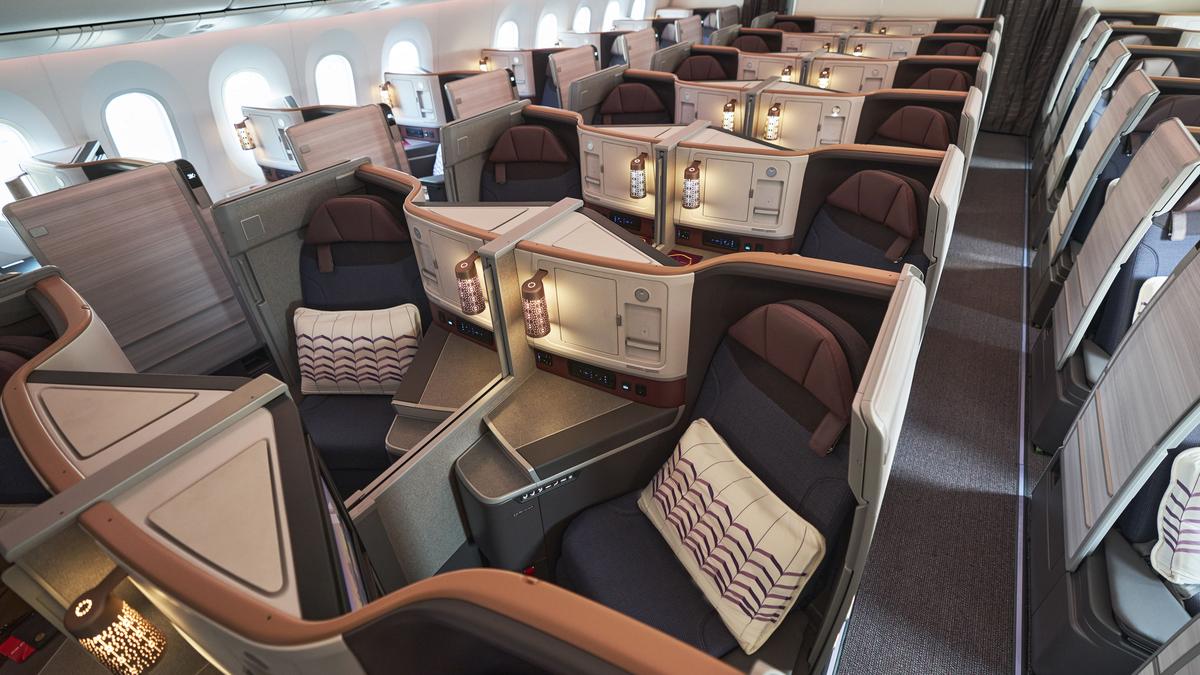
The interiors of Tata-led Air India’s first aircraft Boeing 787-9 Dreamliner
| Photo Credit: Special Arrangement
On the eve of its new operation between Mumbai-Frankfurt route, I find myself on an exclusive ferry trial flight between Delhi and Hyderabad. As I board, contemporary Indian design is visible throughout the new aircraft. I am fondly reminded of the maximalist, opulent décor that Air India’s cabin were known for in the ’70s and ’80s, from my childhood travels.
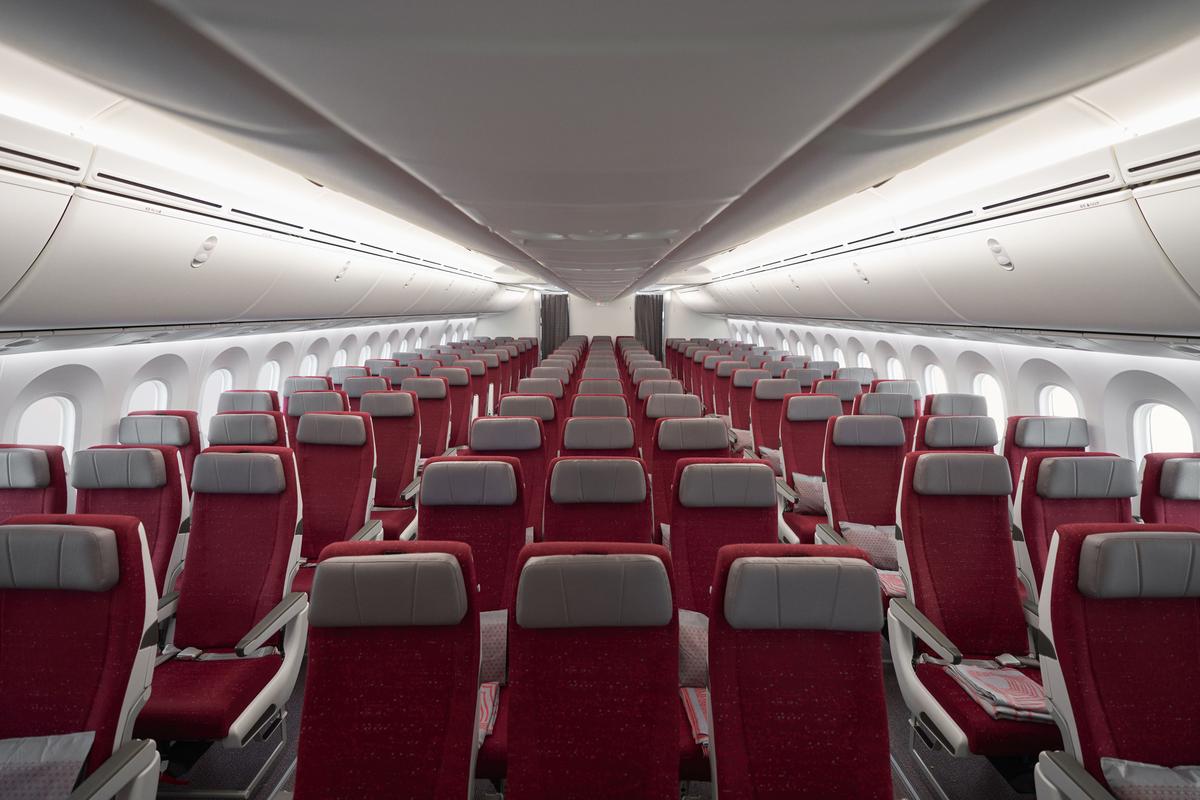
Tata-led airline’s first customised aircraft and signals the beginning of its privatised, revamped phase.
| Photo Credit:
Special arrangement
Air India had been contending with reputational challenges related to uneven maintenance standards and aging aircraft technology for years now. The airline was brought back into the Tata Group fold in January 2022, after a gap of 70 years.
The induction of the new Boeing 787-9 Dreamliner — a longer, more advanced variant of the original Dreamliner B787 that was inducted into Air India’s fleet almost 15 years ago — marks the Tata-led airline’s first customised aircraft and signals the beginning of its privatised, revamped phase.

The business-class seat here is a talking point — it promises to shape the way many Indian luxury travellers will fly over the next decade or so, as Air India plans to retrofit all its older planes with the same cabin design across the fleet. The cabin is laid out in a 1-2-1 format, ensuring aisle access for everyone. The Elevate Ascent seat comes with a sliding privacy door, turning the cabin into a suite. The cabin, equipped with a spacious work top, features a reading lamp with the Indian jaali design that lends a lounge-like vibe to the space. With this new cabin, the Indian carrier’s business class product, find itself, superior is not competitive to other European carriers on that and similar routes. A quick Internet search indicates that March round-trip Mumbai to Frankfurt and back in business class in this particular aircraft costs ₹3.11 lakh, surprisingly cheaper than German carrier Lufthansa on this very same route ₹3.56 lakh.
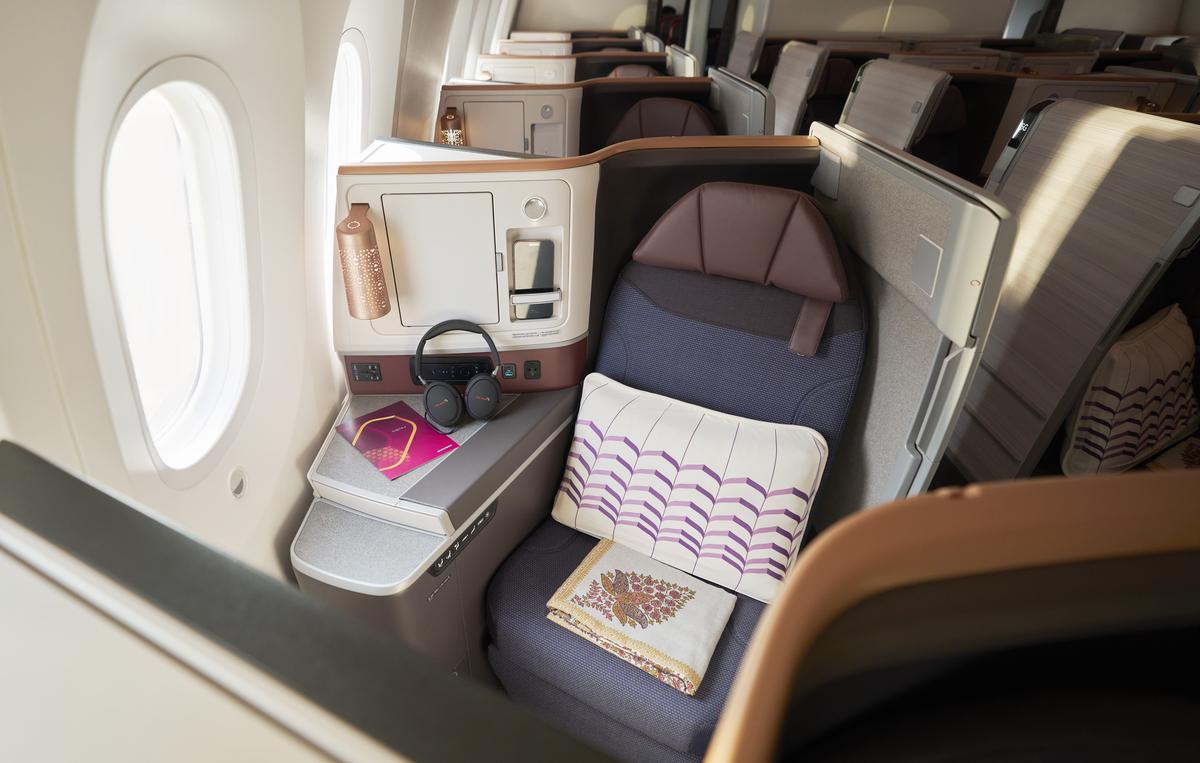
The design-forward business-class cabin features a reading lamp with the Indian jaali design that lends a chic, lounge-like vibe to the space
| Photo Credit:
Special arrangement
Over the shoulder, a spacious cubby has a mirror for personal grooming and USB-C power outlets for charging devices. The highlight, however, is the mobile phone harness — wireless charging built into a secure cradle, angled intentionally away from the passenger to encourage disconnection and immersion in the flight experience.

Air India has clearly learnt from its past experiences, especially with respect to the inflight entertainment screen. The 17-inch 4K touchscreen delivers a smooth, intuitive interface that makes older, glitch-prone screens a distant memory. When it’s time to rest, the 42-inch seat pitch transforms into a flatbed suite, complete with custom bedding, an embroidered paisley throw, Tumi loungewear, and Forest Essentials amenity kits.

Meals are presented in delicate crockery, but my favourite is the coffee mug with the iconic Maharaja motif — a nod to a beloved piece of Indian pop culture. Two western and two Indian options were served. And Air India has just announced its new premium wine, champagne and spirits curation.
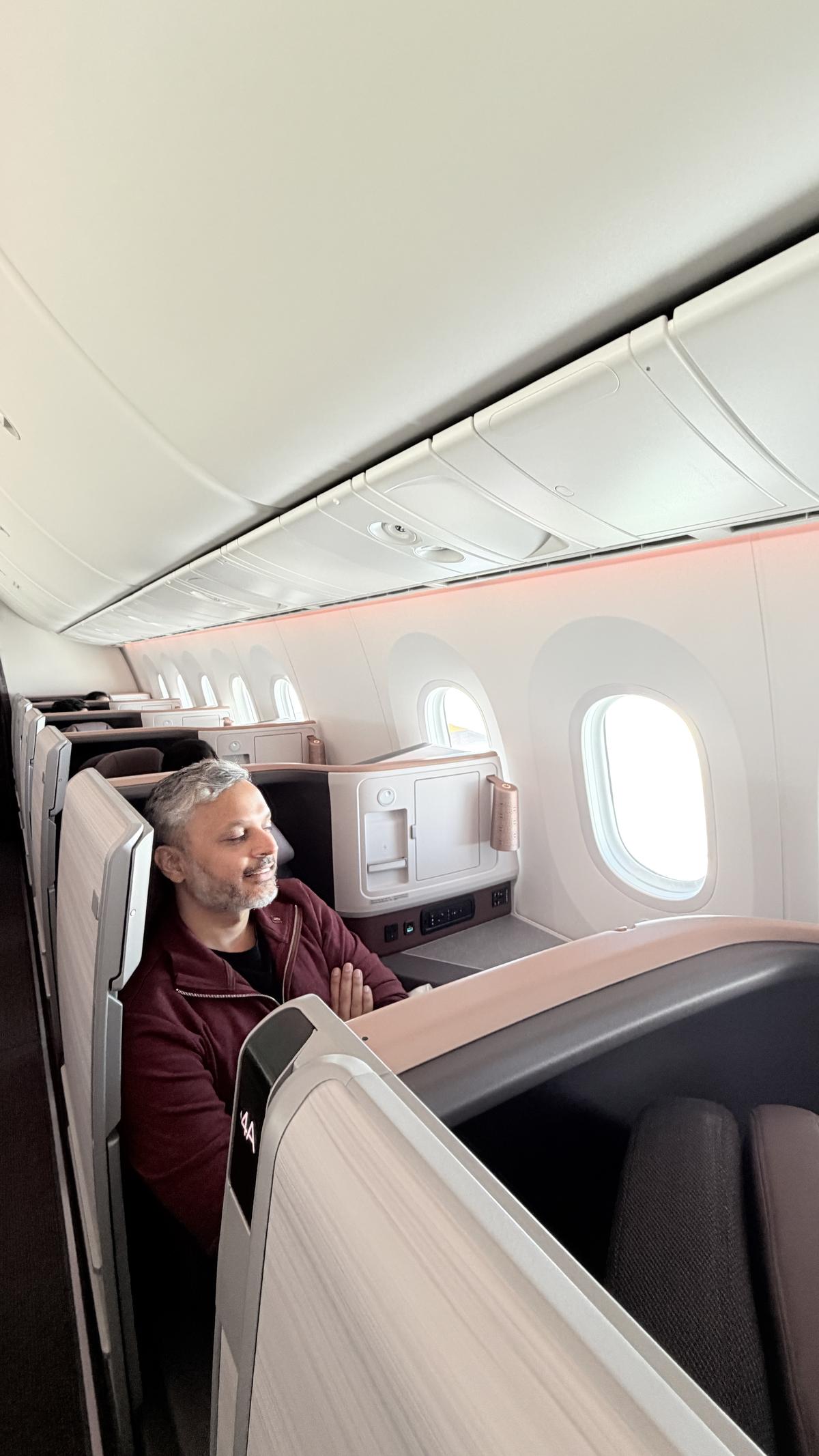
The writer embarks on an exclusive ferry trial flight between Delhi and Hyderabad, on January 28.
| Photo Credit:
Special Arrangement
My verdict: Air India has embraced a straightforward, linear cabin layout, offering a consistent seat experience to its passengers and a marked improvement over the staggered formats seen elsewhere. The design channels the nouveau Indian aesthetic — understated, contemporary, and refreshingly minimalist. Coupled with refined dining, thoughtful amenities, seamless entertainment, and new airport lounges. This offering signals a turning point: luxury-minded Indian travellers now have reason to favour Air India over foreign carriers. Over time, one can hope the airline will shed lingering stereotypes of “broken seats” and “non-functioning screens.”
Published – February 09, 2026 01:49 pm IST
