



The airport is a lawless place where coffee at midnight, wine at sunrise, and fries for breakfast are perfectly reasonable. For a few fleeting hours, time zones blur, routines vanish, and nobody questions anything. At Singapore’s Changi Airport, these lines blur further, turning the airport experience into a day at an amusement park, sans the long queues.
Consistently named the World’s Best Airport by Skytrax, a UK-based consultancy that ranks airlines and airports, Changi Airport operates like a well-oiled machine. Spread across four terminals, it can handle up to 90 million passengers a year, connecting Singapore to around 170 cities via nearly 100 airlines.
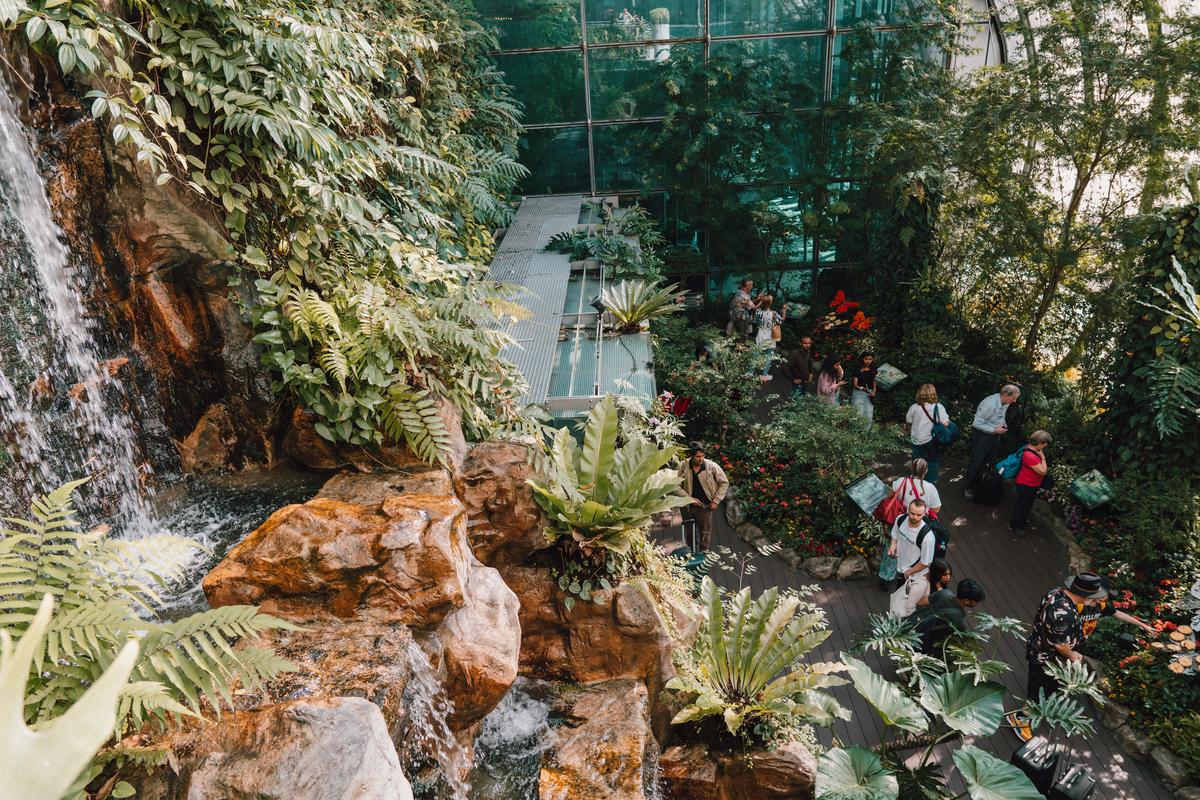
The Butterfly Garden is the first of its kind in an airport and features a 6m tall grotto waterfall. The enclosure has over 1,000 tropical butterflies from as many as 40 species across the different seasons of the year including the The Common Rose, Singapore’s national butterfly.
| Photo Credit:
Special Arrangement
So what makes Changi Airport the ‘best’? For Kevin Ng, vice president, Changi Airport Group (CAG), it is its ease and design. “When you’re flying, whether it’s six hours or 18 hours, it can be stressful and claustrophobic. One of the first things we asked was: what do you miss when you’re on a plane? It was always greenery. That became one of the fundamentals of how we design our spaces,” he says, adding that this might just be the only airport in the world with its own horticulture department.
With over six lakh ferns, vines, shrubs and flowering plants strategically scattered across its four main terminals and over a lakh plants and trees within Jewel (a 10-storey Nature-themed retail complex with a vortex waterfall at its centre), it feels less like an airport and more like a landscape you move through. From an olive tree, water lillies, to agave shrubs and fig trees, the Jewel is dubbed the forest valley for a reason.
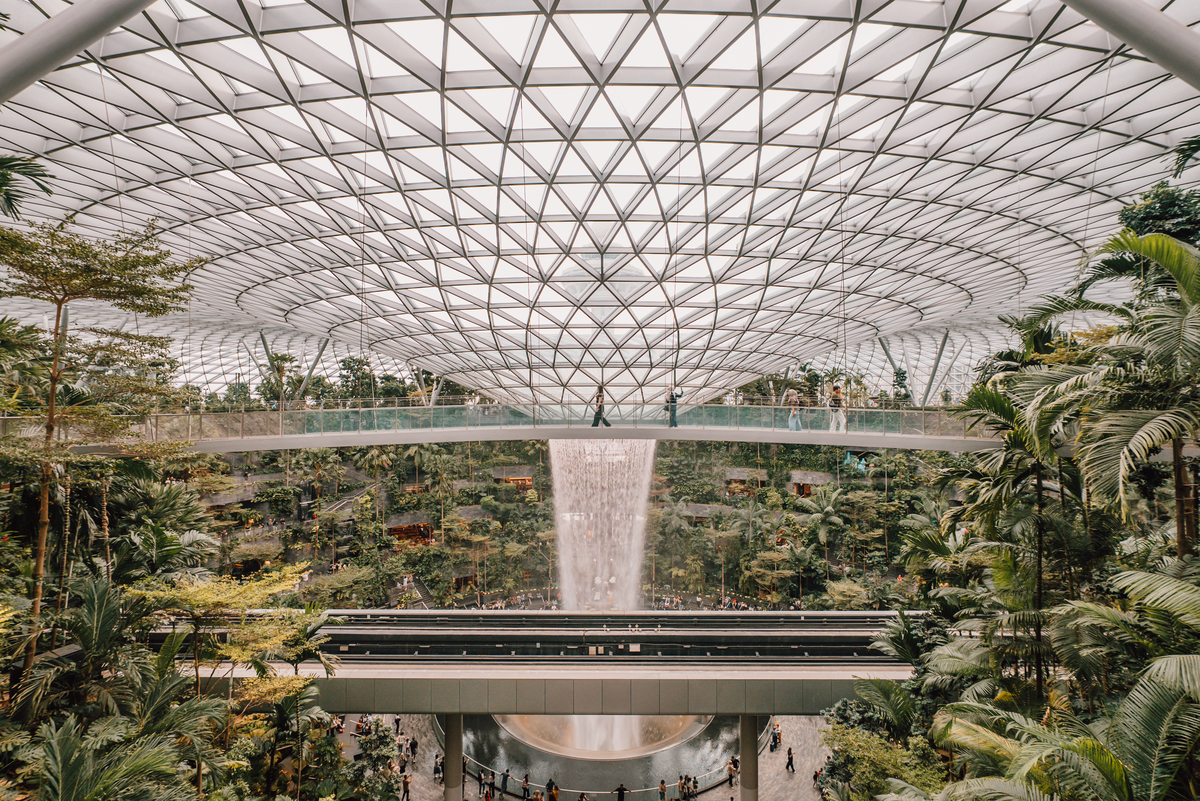
Forest valley and vortex waterfall at The Jewel
| Photo Credit:
Special Arrangement
Even its themed gardens for butterflies and sunflowers, are not standalone attractions, but part of a larger attempt to soften what is otherwise a highly controlled, high-stress environment.
However, your visibly lowered cortisol levels during transit through Changi airport cannot be credited to greenery alone. Immigration queues, which can take anywhere between 10 minutes to an hour at most international airports, is reduced to under a minute here. There are no queues, no manual checks, and no waiting, courtesy of the biometric clearance that does the work in the background. Your face becomes your passport, and you move through without breaking stride.
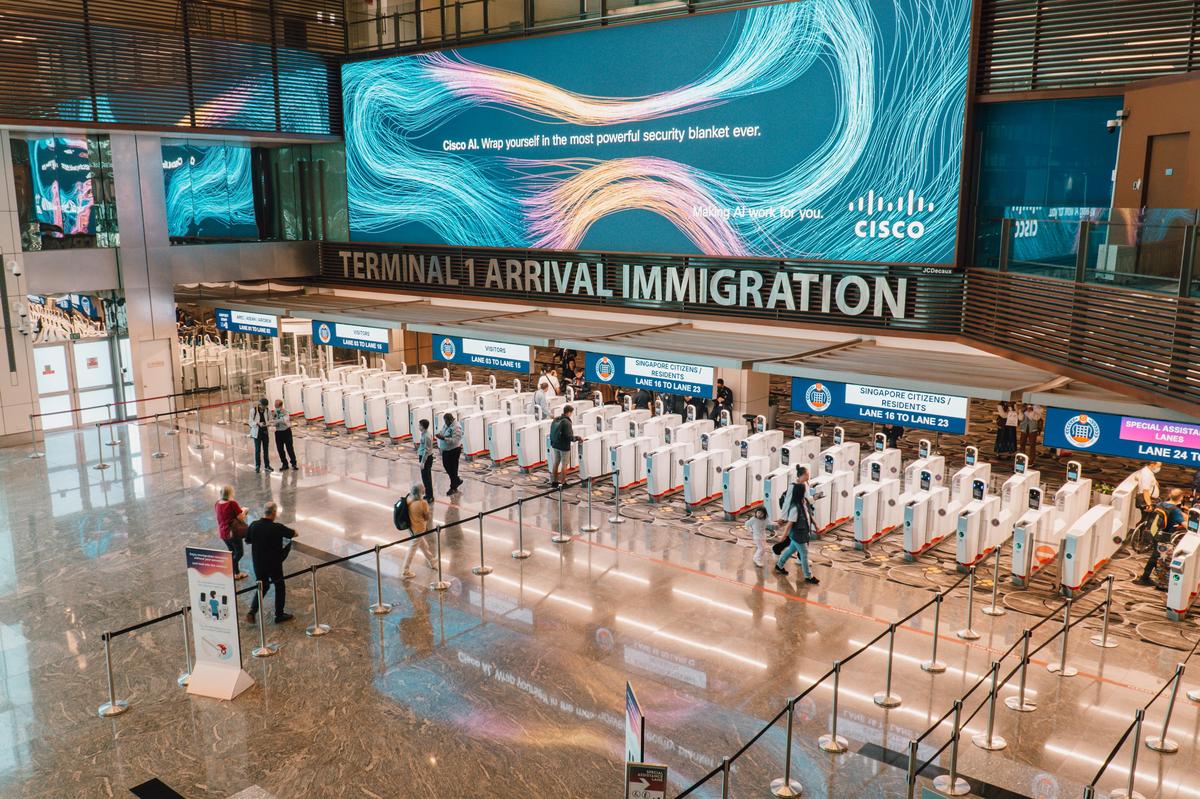
Singapore Changi Airport offers fast automated immigration (often <10 seconds) using facial/iris recognition at automated lanes. Passengers (including first time foreign visitors) scan their passport, face for quick entry.
| Photo Credit:
Special Arrangement
Future proofing
The universally accepted time frame to reach the airport before a flight is anywhere between two to three hours. While you can carry a book, download your favourite movies and get ready to wait for long hours, the primary struggle is not entertainment, but the hassle of baggage. At Changi, early check-in counters remain open whether you arrive two hours before your flight or 12. The fully automated conveyer belts sort through your luggage according to flight destination and timings, leaving you free to shop, dine, watch a movie, take a nap, or even squeeze in a workout.
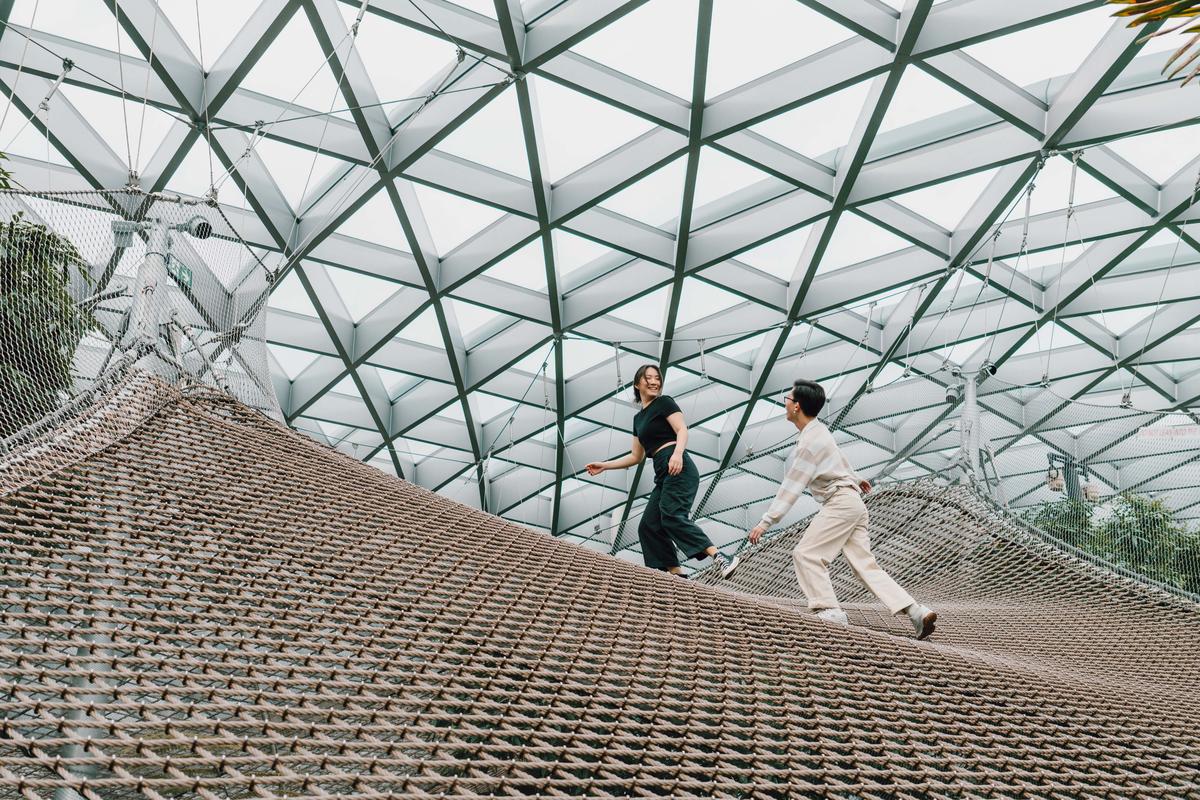
Activities at the Jewel
| Photo Credit:
Special Arrangement
One of the many reasons Singapore has built and developed a world-class airport is because it is a bustling transfer hub. “A lot of people are coming through us, but they’re not coming into Singapore. From India to Australia, and the US, we see a lot of traffic that many hubs around the world like Dubai, Kuala Lampur, Bangkok, and Hong Kong are competing for,” says Kevin.
Expansion plans
After moving to Changi from Paya Lebar in 1981 with one terminal, the airport opened terminals 2, 3 and 4 in the decades that followed, even as it continued to refurbish and expand existing infrastructure. In 2000, it was first named the ‘World’s Best Airport’ by Skytrax. Over the years, passenger traffic steadily increased, as did the airport’s footprint. Anticipating future demand, CAG has acknowledged that capacity across existing terminals will be reached by the late 2020s. In 2024, it was announced that improvements will be carried out for all four terminals for baggage handling, immigration and skytrain connectivity at a budget of SGD 3 billion.
At the Jewel, there is an interactive experience studio which takes visitors through the history and journey of Changi airport from inception to date.
Construction of Terminal 5 has now begun, marking it the airport’s largest expansion to date with a budget of over 5 billion SGD. The new terminal, spanning a massive 1,080 hectares, which is larger than all four current terminals combined, is expected to open mid-2030s. It will be able to handle upto 50 million passengers annually.
No time for boredom
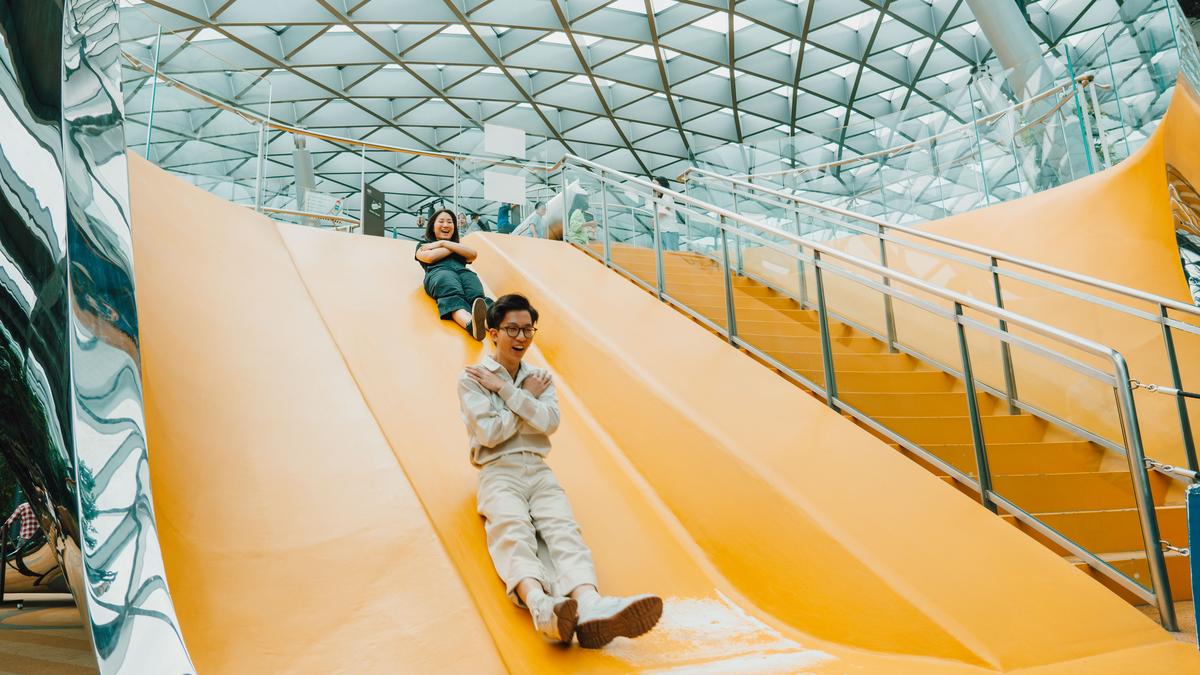
Being an important transfer hub comes with travellers who are in transit areas for long hours. Spending time in lounges, dining, and shopping aside, commuters can watch movies for free at two theatres, get a free cocktail made by a robotic AI bartender Toni at Lotte Duty Free, use the world’s tallest airport slide, a 12m or four storey high slide, or even get a free two-hour bike ride to explore the outdoor gardens, nearby beaches, the Changi village and all the way up to Gardens by the Bay if you have enough transit time.
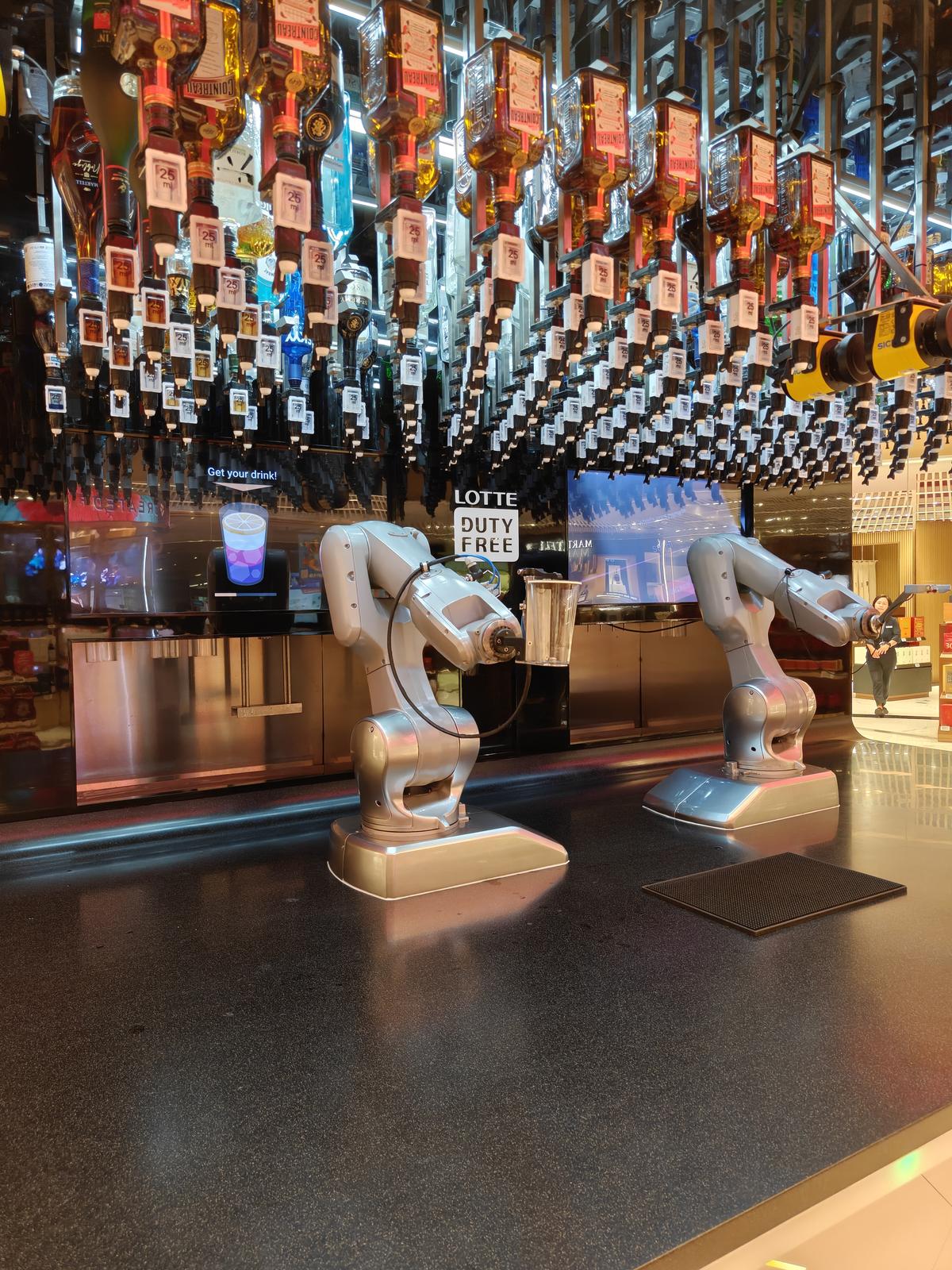
At the Lotte Duty Free in Changi Airport Terminals 1 to 3, Toni the robotic AI bartender makes you a cocktail of choice for free
| Photo Credit:
Sangita Rajan
Passengers often miss out on exploring transit destinations for fear of missing their onward flight. At Changi, a layover of more than five and a half hours makes you eligible for one of four free city tours — a river tour, a culture and heritage tour, a city sights tour, or a Sentosa Island tour.
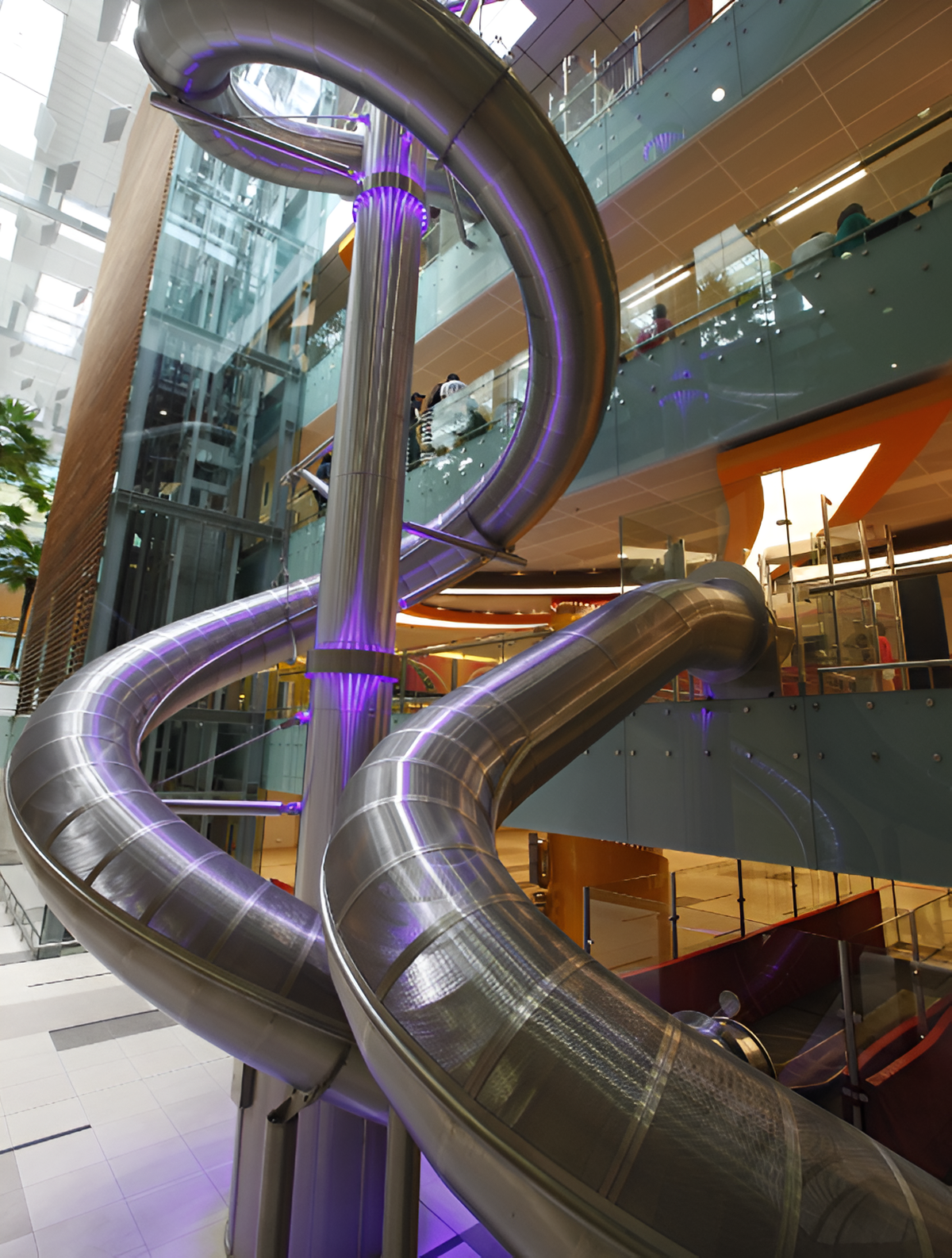
Singapore’s tallest slide and the world’s tallest slide in an airport. At 12m tall (or four storeys high), The Slide@T3 at Changi Airport goes from Level 1 and take ride down to Basement 3
| Photo Credit:
Special Arrangement
The two and a half-hour culture and heritage tour takes passengers through the Central Business District, Chinatown, Singapore River and Kampong Glam with a 30-minute stopover in Chinatown and Kampong Glam. Even with the hot and humid Singapore weather, opting for the river cruise for views of Merlion, Esplanade theatre, and Marina Bay Sands hotel is worth it. As with any guided tour, these tours help you learn about the history of the city beyond just the facts. The guide gives recommendations for things to do, places to stay, restaurants to eat at, all for the next time one comes to Singapore at leisure.
Changi does not wait for travellers to choose Singapore. It makes the case before they even leave the airport. The efforts to boost tourism are hidden at every step, and rightfully so.
The writer was in Singapore at the invitation of Changi Airport Group.
Published – April 08, 2026 08:00 am IST
