



BBC News NI south west reporter
 BBC
BBCThe Omagh bombing inquiry has been told the speed of disclosure “must increase”.
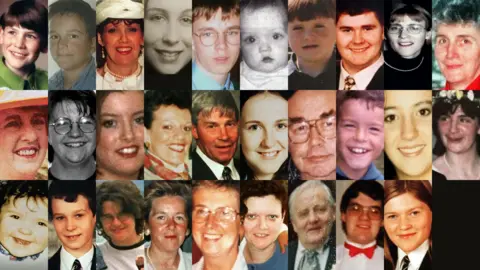
Twenty-nine people, including a woman who was pregnant with twins, were murdered in the Real IRA attack on 15 August 1998.
The public inquiry was established to examine if the attack could have been prevented by UK authorities.
On Monday, barrister Paul Greaney, counsel to the inquiry, told Lord Turnbull the legal team had hoped that disclosure from relevant bodies would have been more advanced than it currently is.
Mr Greaney said the “speed of disclosure to the inquiry by material providers must increase”.
He repeated calls for “state core participants” and all “material providers” to work at pace to fulfil the requirements of the inquiry.
Many documents, he said, exist only in hard copy and may take some time to review.
He added that the inquiry would use its powers to ensure the fullest possible levels of disclosure.
Mr Greaney said the inquiry expects openness and transparency from state core participants.
Barrister for the Northern Ireland Secretary Fiona Fee told the inquiry “a significant volume of work” has been undertaken in relation to inquiry disclosure.
“There is a vast volume of material which must be collated, carefully reviewed and provided to the inquiry.
“This process is not simply a matter of gathering readily available paperwork, it’s an immense logistical undertaking requiring meticulous attention to detail, thorough analysis and a strategic, organised approach.”
Some material cannot be publicly disclosed
A number of organisations fall under the remit of the NI Secretary including the UK Intelligence Community (UKIC), the Ministry of Defence (MoD), the Northern Ireland Office (NIO), the Cabinet Office (CO) and the Foreign, Commonwealth and Development Office (FCDO).
Ms Fee said there will be variations on what is disclosed across the Secretary of State grouping, adding that there will “inevitably” be material that cannot be disclosed in open but will be provided to the inquiry chairman.
She said there will only be a “very limited amount” that UKIC can say in open.
However, Ms Fee said the intelligence sector was “engaging meaningfully” with the inquiry and undergoing “an extremely difficult disclosure” exercise.
The overall disclosure process and evidential picture is at “an early stage”, she added.
Inquiry continues on Tuesday
On Monday, the inquiry is hearing from lawyers representing the Police Service of Northern Ireland, the secretary of state, the Police Ombudsman for Northern Ireland and Sir Ronnie Flanagan, the head of the police at the time of the Omagh attack.
Statements will also be read by lawyers representing families affected by the bombing.
There will be a second day of statements on Tuesday.
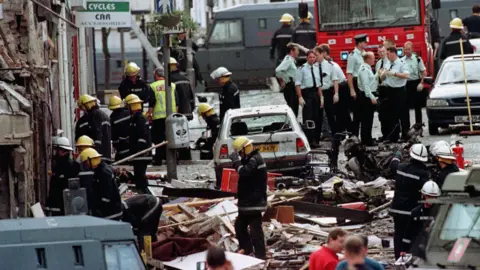
What was the Omagh bomb?
The bomb that devastated Omagh town centre in August 1998 was the biggest single atrocity in the history of the Troubles in Northern Ireland.
It came less than three months after the people of Northern Ireland had voted yes to the Good Friday Agreement.
Who carried out the Omagh bombing?
 PA Media
Three days after the attack, the Real IRA released a statement claiming responsibility for the explosion.
It apologised to “civilian” victims and said its targets had been commercial.
Almost 27 years on, no-one has been convicted of carrying out the murders by a criminal court.
In 2009, a judge ruled that four men – Michael McKevitt, Liam Campbell, Colm Murphy and Seamus Daly were all liable for the Omagh bomb.
The four men were ordered to pay a total of £1.6m in damages to the relatives, but appeals against the ruling delayed the compensation process.
A fifth man, Seamus McKenna, was acquitted in the civil action and later died in a roofing accident in 2013.
