





 East Anglia Farmers Unite
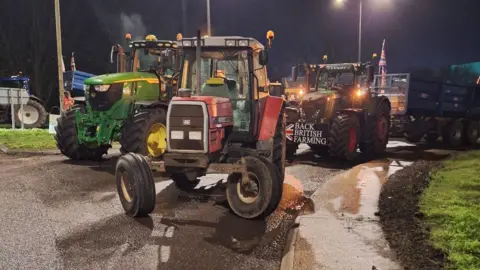
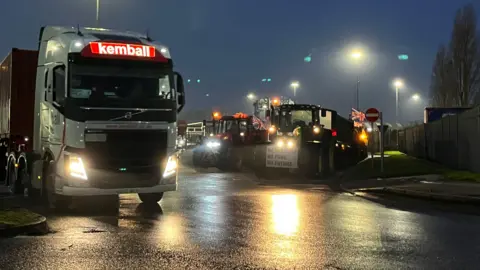
Farmers have used their tractors to form a blockade at the Port of Felixstowe.
Campaign group East Anglia Farmers Unite was at the Suffolk site between midnight and 07:00 GMT to protest against “cheap lower standard imports and inheritance tax”.
It said farmers started by blocking two gates to the port, but scaled back to a single gate by 04:00 for safety reasons, due to the amount of lorries trying to access the site.
Suffolk Police said it had been liaising with organisers and other agencies to facilitate a peaceful and safe protest. The port and the Department for Environment, Food and Rural Affairs (Defra) have been approached for comment.
The farming group said on social media that it had allowed lorry and dock workers to leave the port after their shifts, and had allowed a medical container to also exit the docks.
Similar blockade action by farmers took place at Lidl distribution centres around the country on Thursday, including in Bedfordshire.
 Darren Rozier/BBC
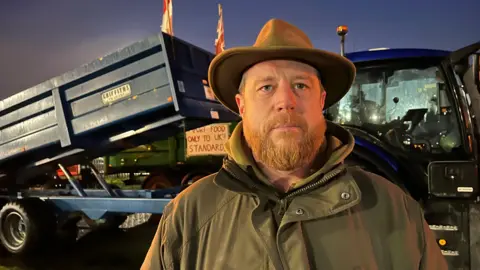
Self-employed farmer Spencer Campbell, from Stowmarket, said: “I decided to come along because I want to safeguard my future… and I want better standards and prices for our farms.”
He added that farmers were doing “everything they can” to cut losses this year but imported foreign grain, which he said was produced to a lesser standard, was “much cheaper” and difficult to compete with.
Robert Blyth said his family had been farming in north Essex since the 17th Century and wanted to continue passing his farm to future generations.
He said farmers were at the port as there had been an increase in low quality fruit imported to the country.
“We’re having to produce to higher welfare standards but still face non-competitive products coming in,” he said.
 Darren Rozier/BBC
Farmers also said that plans to tax inherited farmland had been a stress on finances.
The government said it would start imposing a 20% tax on inherited agricultural assets worth more than £1m from April 2026, ending the 100% tax relief that had been in place since the 1980s.
But after months of protests by farmers, the government increased the threshold from £1m to £2.5m.
Blyth said: “It doesn’t make any sense for a business to have to sell off chunks of its business every generation that it gets passed along.”
As part of the protest action at supermarket sites on Thursday, Defra said it was “backing British farmers as part of a new era of partnership to create a productive, profitable and sustainable future for farming”.
“Our new Farming and Food Partnership Board will bring government, farming and the food industry together to better enable farm businesses to grow, invest and plan for the future,” it said.
“This is alongside delivering the largest nature-friendly farming budget in history, protecting farmers in trade deals, making supply chains fairer to help secure the farming sector’s future.”
