



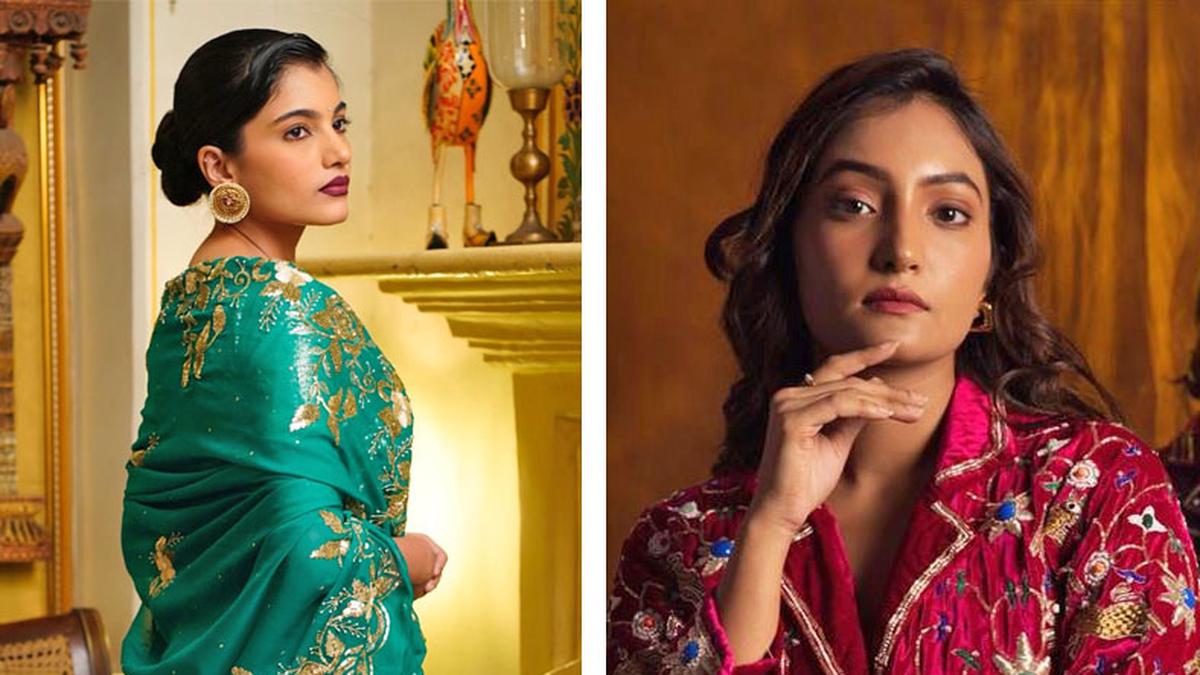
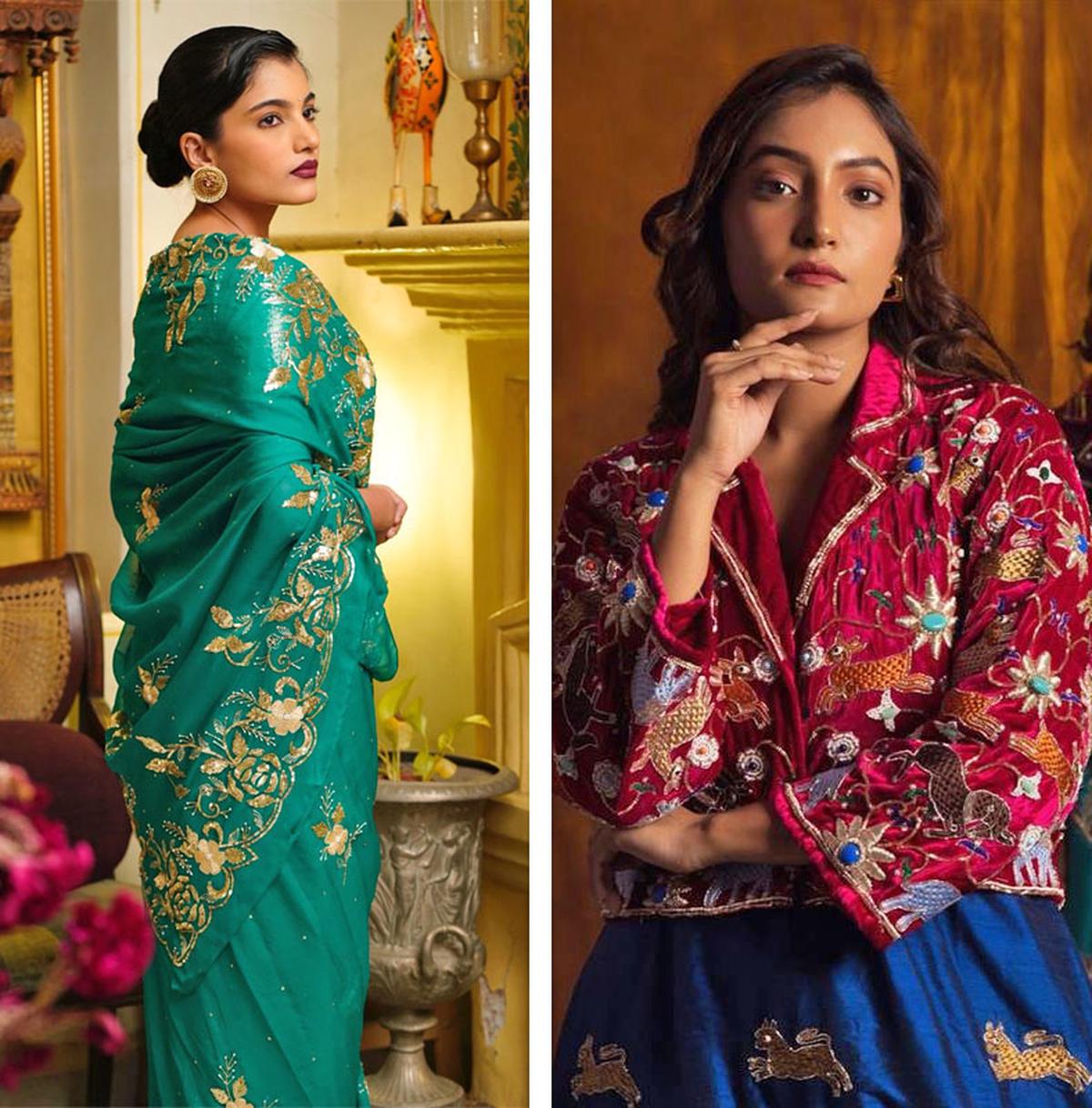
Saris and ensembles with heritage crafts were the focus of Royal Fables Hyderabad edition
| Photo Credit: Special Arrangement
Lucknow is considered the home of zardozi embroidery today. Did you know that Ayodhya, which was the capital of Awadh, prior to Lucknow and Faridabad, was once known for its skilled craftspeople specialising in the traditional metallic embroidery? At the 2026 edition of Royal Fables, a pop-up curated by Anshu Khanna and Charu Singh and hosted by textile designer Gaurang Shah and jewellery designer Pratiksha Prashant in Hyderabad, princess Manjari Mishra of the royal family in Ayodhya, shared insights on the technique, as she continues to work with craftspeople specialising in zardozi and beadwork.

Her label Shilpmanjari keeps the traditional craft alive through embellishments on saris and separates. Think of a shikargaha-themed(royal hunting ground) velvet jacket with semi-precious stones, zari and resham work paired with a tunic with lions and deer motifs embroidered with zardozi.
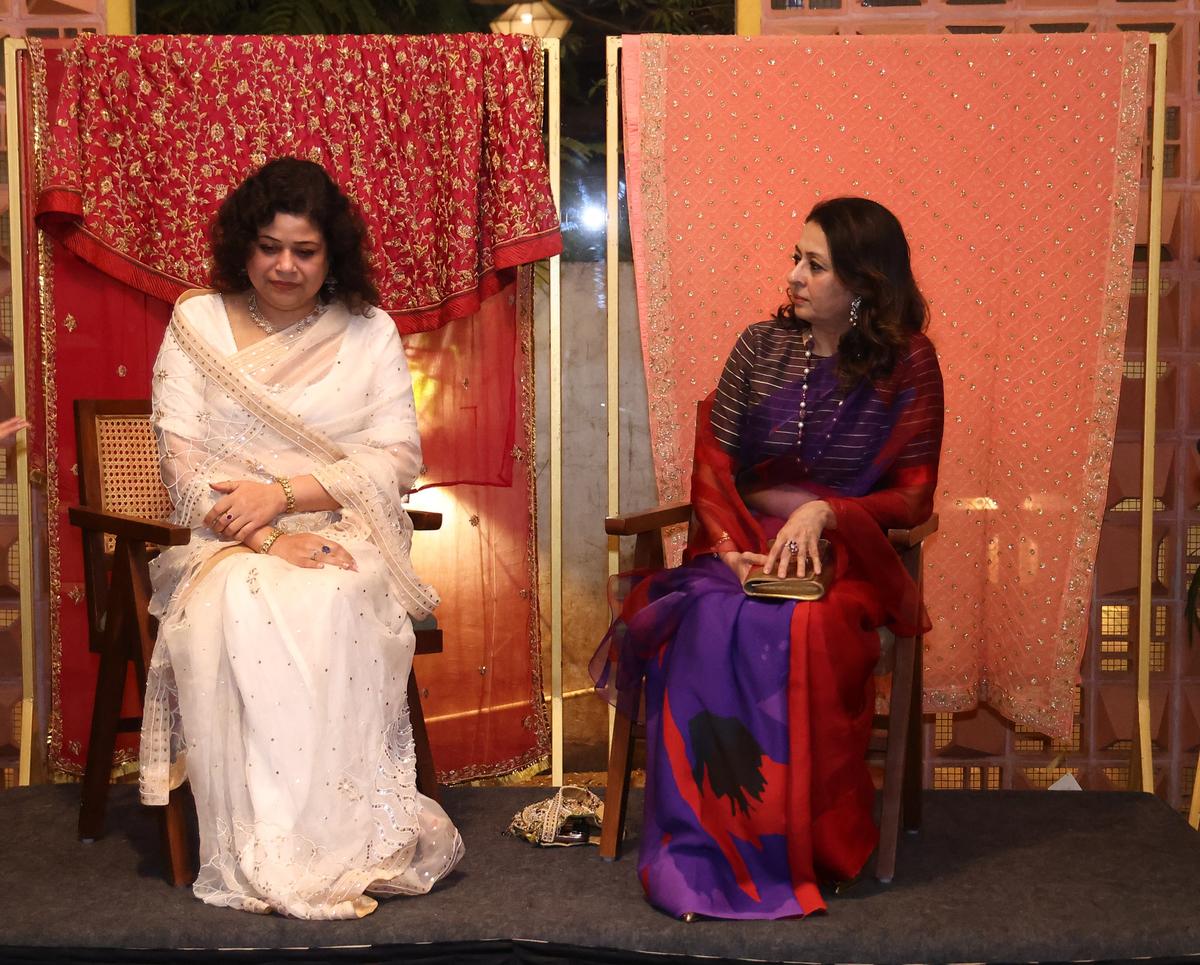
Princess Manjari Mishra of Ayodhya and Ambika Raje Ghorpade of the Sandur royal family
| Photo Credit:
Special Arrangement
A one-day showcase at Gaurang’s Kitchen presented India’s royal heritage through saris, clothing and collectibles ranging from heritage weaves to fine jewellery, and silver-plated accessories to antique and costume jewellery. This marked Royal Fables’ third edition in Hyderabad.
“The focus is on saris this year since we are collaborating with Gaurang Shah who is known for his handwoven range of textiles,” said Anshu Singh, recalling the formation of Royal Fables more than 15 years ago to promote palace karkhana (small manufacturing units) where local crafts were the mainstay. “We began with 10 women from royal families and today we are associated with nearly 50 royal families. The women in these families help keep traditional crafts such as gota (a type of applique embroidery), ek taar resham (embroidery that uses one strand of silk thread) and tilla work (Kashmiri embroidery with gold or silver threads) alive.”
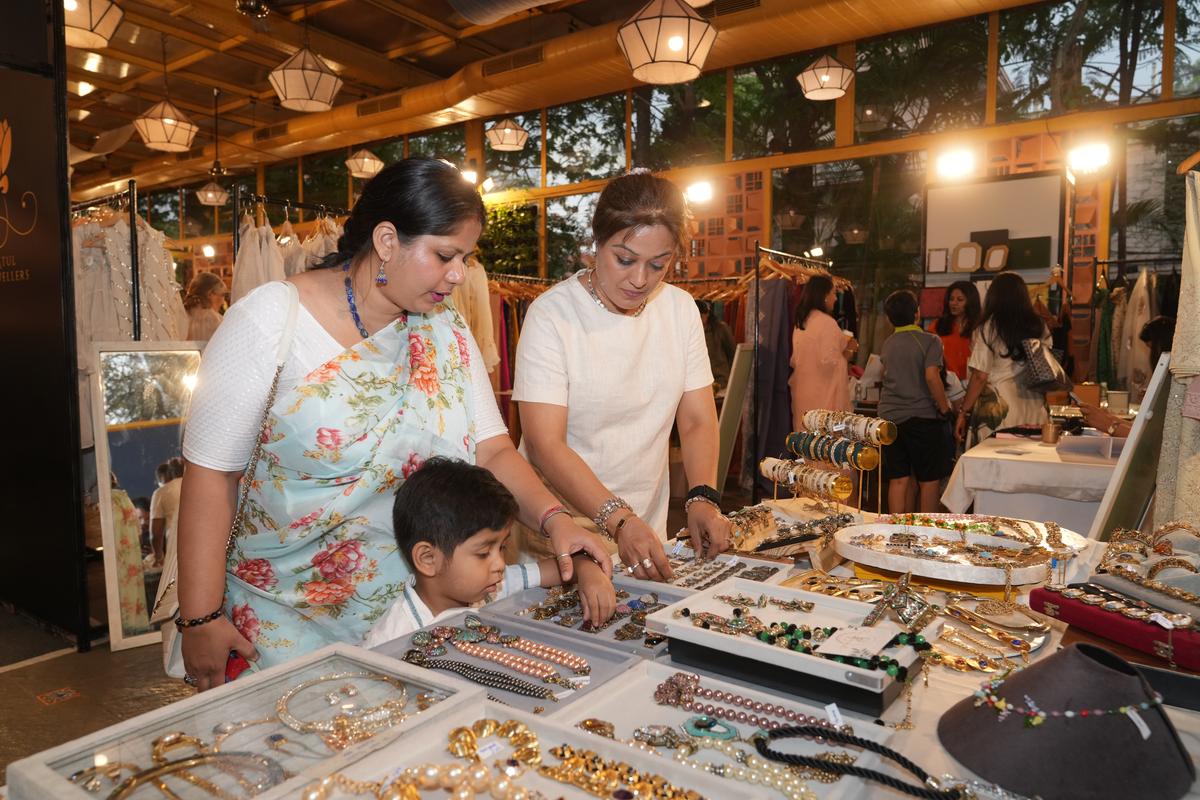
Alongside saris, fine jewellery was also showcased at the pop-up exhibition
| Photo Credit:
Special Arrangement
Royal Fables transformed into a travelling exhibition, showcasing limited edition collections in different cities. “Most of the textiles, jewellery, accessories and collectibles are made for this exhibition and museum shops. The idea has been to draw a craft-loving buyer’s attention to the traditional techniques, mak it relevant in the contemporary context,” adds Anshu.
On showcase were saris with borders encrusted with emeralds and rubies, fine jewellery by Atul Jewellers, and shikargah-themed weaves (with motifs depicting imagery from the royal hunting) on georgettes for younger buyers looking for easy drapes, among others. Chanderi saris by Radhika Gaekwad, textiles by Kanwarani Kamini Singh of Seohara, heritage embroidery by Charu Saigal, jewellery by Namrata Singh, and Benares weaves from House of Shilpi Gupta were also in the collection.
Ambika Raje Ghorpade of Sandur, Jaykirti Singh of Baria, Digvijay Singh of Awagarh, Rohini Singh Gupta of Kachhi Baroda, Nawab Kazim Ali Khan, Bhumender Singh of Awagarh, and Nandini Singh were among the others representing India’s royal families and celebrating palace craft, couture and cultural legacy.
Published – March 18, 2026 01:52 pm IST
