




BBC News, South West
BBC Spotlight presenter

 BBC
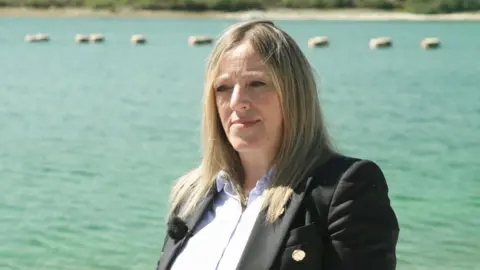
BBCThe boss of South West Water (SWW) has said she unreservedly apologises for a parasite outbreak in south Devon a year ago.
In an interview with the BBC, Pennon Group CEO Susan Davy said she suffered “sleepless nights” as communities in Brixham and Kingswear grappled with the outbreak at the time.
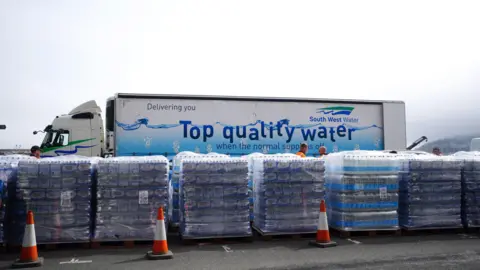
More than 100 cases of cryptosporidiosis were linked to the outbreak, while tourism firms reported losing millions of pounds, after the parasite was found in a reservoir on 15 May 2024.
Responding to criticism over bill rises, Ms Davy conceded the increases were “too much” for some, but were needed to fund an upgrade of the sewerage network in Devon and Cornwall, a process that could take 15 years.
 PA Media
Ms Davy said she wanted to “reiterate my unreserved apology” for the affect on residents and businesses.
“It was a very difficult time for them and they showed a lot of patience with us as we got the drinking water back to where it needed to be,” she said.
Asked how she had personally coped during the crisis, she added: “I certainly had sleepless nights last year and I had sleepless nights through the 2022 drought as well.
“This is a 24/7 operation and my focus is on making sure we supply our customers and they get the services they need.”
The SWW boss said she regretted if people felt she was absent during the crisis.
“I wasn’t absent, I was there,” she said.
“I was meeting customers, meeting the community and making sure everything was happening as it needed to for that very difficult operation.
“So, I wasn’t hiding, I was there in Brixham.”
Ms Davy said “sometimes things do go wrong” with a large network.
“Occasionally, things go wrong and this went wrong,” she said.
“This is our network, it was our water.”
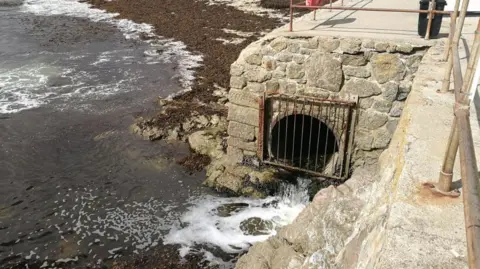
Regarding sewage spills, Ms Davy said SWW “had to redesign” its overflow systems to prevent them.
“We have to stop those spills, we want to stop those spills and we’re working on it now,” she said.
“I can’t lie, it’s going to take us 15 years to get this programme of redesigning done, and we have £3.2bn of investment that we’re putting in over the next few years to assist with redesigning our waste water system.”
She said the company had listened to customers and its priority was ensuring water quality on bathing beaches.
“We want to make sure they’re as good as they can be,” she said.
‘Tailored’ bills
Ms Davy also responded to criticism following last month’s bill increases when the average SWW customer saw their bills rise by 28%.
Customers had said they were angry and concerned with the increase, with one describing it as “daylight robbery”.
When asked what the company was doing to address the issue, Ms Davy said SWW “tailored” bills to customers by offering different support and tariffs, some which deduct 85% off bills.
“The bills this year on average have been about £1.85 a day,” she said.
“I know for some customers that is £1.85 too much and we need to sit there and support them and work out how we can do that.”
‘No sign of hosepipe ban’
Ms Davy said the company was confident there would be no need for a hosepipe ban similar to the one which took place across Cornwall in 2022.
“On the scenarios that we run, with the weather predictions, we don’t see the signs for a hosepipe ban this summer for our customers, but it was very concerning for customers at the time,” she said.
Since the 2022 drought Ms Davy said the company had increased resource availability for Cornwall by 34%.
“Given 90% of what we take comes from rivers we need to think of different sources and ways of supplementing the source when it gets hot and dry in this country,” she said.
Earlier this year South West Water’s plans to increase resources by using a seawater filtering process called desalination were rejected by The Marine Management Organisation.
“I still firmly believe we need to think about desalination, we will need to walk carefully through it with communities on what it means, what the impact might be, but we do need it,” said Ms Davy.
