




Rachel Clun,
Kris Bramwelland
Emer Moreau

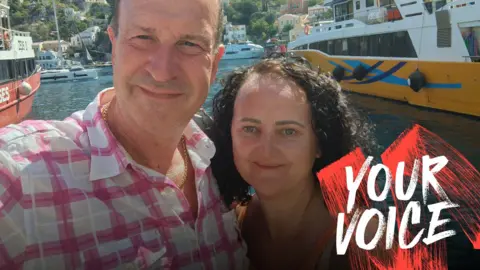 Neal Stead
Chancellor Rachel Reeves has announced her Budget after weeks of speculation.
The changes include a freeze to income tax thresholds, a new electric vehicle tax, limits to tax-free cash savings and a so-called mansion tax.
BBC News has been hearing from people with a range of incomes on how they feel about the measures announced in the Budget.
If there are issues you would like to see covered, you can get in touch via BBC Your Voice.
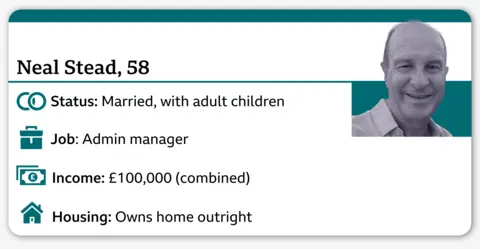
Neal Stead and his wife Tara both work in administration – Neal in a contact centre, and Tara at a hospital.
With a combined income of about £100,000 and having paid off the mortgage on their Bradford home, Neal says they don’t have major financial pressures. But at 58, he is concerned about retiring.
He said he was disappointed that the amount of money that can be saved tax-free each year in a cash Isa (Individual Savings Account) will be reduced from £20,000 to £12,000 a year for the under 65s.
“That’s a big blow for me because I’m a saver and I’m coming up to retirement,” he says, adding he feels penalised for putting money away for a more comfortable retirement.
“The message I got was spend your money, don’t worry about the future,” he says.
Neal says he felt the Budget had been sold as measures to tackle the cost of living but says “I can’t see the cost of living reducing for me, only increasing.
“There will be less in my pocket than there was yesterday.”
‘I’m on £32,000 and the Motability changes are scary’
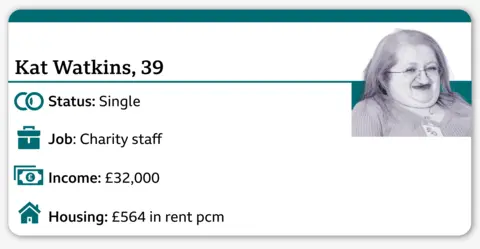
Kat Watkins lives in Swansea and works for Disability Wales. Her earnings make up just under two-thirds of her income and she receives universal credit and personal independence payment (Pip).
Kat has osteogenesis imperfecta type 3, known as brittle bone disease, and says she faces higher energy bills as she needs to charge her wheelchair and other equipment.
She says the Budget wasn’t a “complete disaster” and thinks the cut to energy bills will help disabled people.
But Kat disagrees with the chancellor’s changes to the Motability scheme, which is being changed so “luxury” cars like BMWs will no longer be available.
A person must be on the higher mobility rate of the Pip to qualify for Motability, which Kat says is “exceptionally difficult” to get.
Last week, Kat applied for a new car under Motability, which helps people with disabilities lease cars. She says the only suitable car for her needs is a Mercedes as she needs one with a tail lift.
“It’s a scary thought, if I had waited one more week, I wouldn’t have been able to get it.”
Kat says there is a lot of misinformation around Motability: “If a person wants a luxury car… they’re not going to get it for free.”
Motability customers pay the additional cost for a premium vehicle using their own money.
‘We’re on £150,000 and think the government is punishing EV drivers’
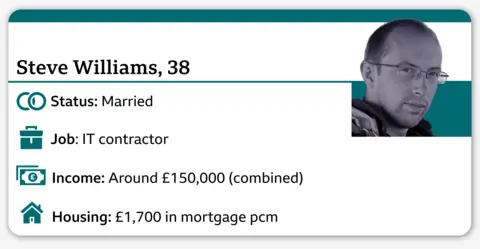
Steve Williams is an IT contractor and his wife is a counsellor. They are both self-employed and he estimates they make a combined £150,000 a year.
They live in Basingstoke and both drive an electric vehicle (EV).
Steve says that at first blush he doesn’t mind the idea of paying a per mile charge.
“What I mind is the fact that there’s already a tax on EVs,” he says, pointing to annual vehicle excise duty.
If someone had a Tesla Model 3, they would pay the annual vehicle excise, the luxury car levy that’s paid on cars worth more than £40,000, VAT on electricity, and now the 3p per mile, he says.
EV-owners may also pay more for their domestic electricity, if they are on a green tariff, he adds.
“I don’t mind paying for the use of the roads and I think paying per mile is a relatively fair way of doing it,” he says.
“[But] there was a massive push by the government to get people driving EVs in the first place. They are now punishing the people who actually took them up.”
‘I make £25,000. There’s not enough to cut the cost of living’
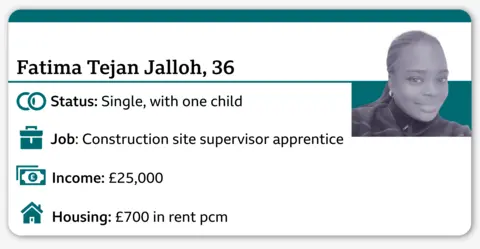
Fatima Tehan Jalloh is a single mum who lives in council housing in north London. She’s a level 4 apprentice construction site supervisor.
She says she is disappointed there was no help with childcare bills and not enough measures to bring down the cost of living.
The chancellor announced an end to some energy bill levies which she says will lower bills for millions of households by £150 a year.
But Fatima, who uses a pre-payment meter, says she tries to use as little electricity as possible, so does not think she will notice a difference.
Also in the Budget was a freeze to train fares in England but Fatima says the prices are “already too high”.
“I have family in Derby and a train ticket is £150 so I cannot afford to see them whether that price is frozen or not,” she says.
She says she is angry at the government for not making good on its promise to turn the UK’s fortunes around. “I will never vote for Labour again,” she says.
“I’m considering moving… my quality of life is nothing,” she says.

